Advantages of DC-Coupled Solar Energy Storage Systems
Learn how DC-coupled solar energy storage systems improve efficiency, reduce conversion losses, and enhance solar energy utilization in commercial and industrial ESS projects.
13/ 2025.Oct
As solar and energy storage systems continue growing, more project developers are paying attention to overall system efficiency instead of only focusing on battery capacity.One topic that is becoming increasingly important is DC-coupled solar energy storage architecture.
Compared with traditional AC-coupled systems, DC-coupled ESS solutions can reduce energy conversion losses and improve solar power utilization, especially for newly built solar + storage projects.
Why DC Coupling Is Getting More Attention
As battery storage becomes more integrated with large-scale solar generation, reducing unnecessary energy conversion steps can help improve overall system efficiency and lower long-term operating costs.
DC-coupled ESS architecture helps improve solar energy utilization and reduce conversion losses.
What Is a DC-Coupled Solar Energy Storage System?
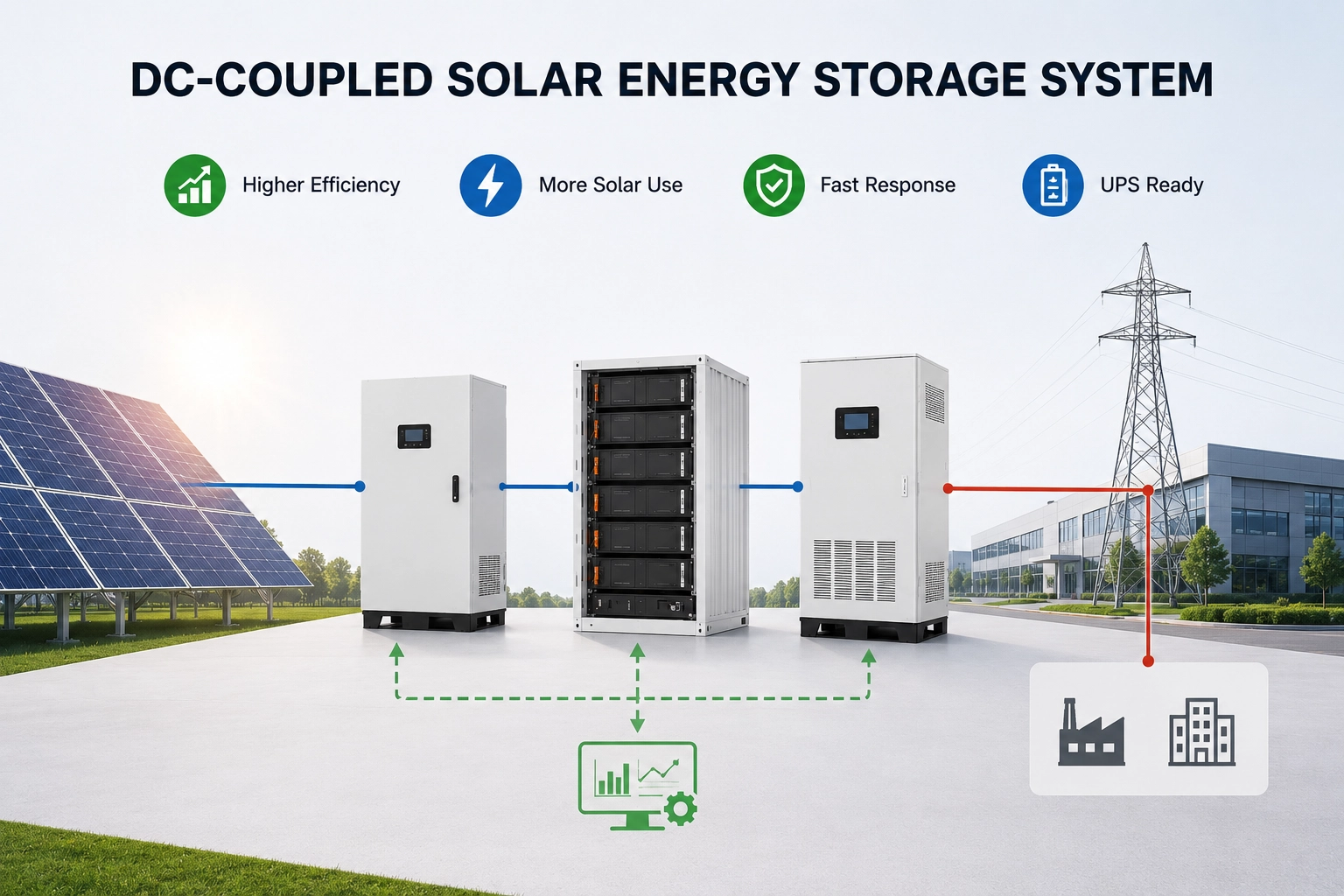
In a DC-coupled system, solar panels and battery storage share the same DC bus before electricity is converted into AC power for the grid or facility loads.
This architecture allows solar energy to charge batteries directly without first converting electricity into AC and then back into DC again.
Because of this, the system can reduce conversion losses and improve charging efficiency.
A typical DC-coupled system usually includes:
Solar PV modules
Battery storage system
DC/DC converter
PCS (Power Conversion System)
EMS (Energy Management System)
One of the Biggest Advantages: Lower Conversion Losses
In traditional AC-coupled systems, electricity generated by solar panels usually passes through multiple conversion stages before entering the battery.
Each conversion step creates some energy loss.
DC-coupled systems simplify this process by allowing solar energy to move more directly into battery storage.
This becomes especially important in projects with:
Large daytime solar generation
Frequent battery cycling
Long-duration energy storage
High self-consumption requirements
Over time, even small efficiency improvements can make a noticeable difference in total system performance.
DC Coupling Helps Improve Solar Energy Utilization
Many commercial solar projects generate excess electricity during midday hours.
Without sufficient storage capacity, some of this energy may be exported to the grid at low value or even curtailed.
DC-coupled ESS systems can improve solar utilization by storing more of this excess energy directly into the battery system.
This is particularly useful for facilities that have:
High daytime solar production
Evening peak electricity demand
Time-of-use electricity pricing
Limited grid export opportunities
DC Coupling Is Often More Suitable for New Projects
DC-coupled architecture is commonly used in newly designed solar + storage systems where the solar plant and battery storage are planned together from the beginning.
Because the system is designed as a complete integrated solution, developers can optimize the solar inverter, battery storage, and PCS configuration more efficiently.
For retrofit projects, however, AC coupling may sometimes provide more flexibility because storage can be added independently to existing PV systems.
If you want to better understand the differences between both architectures, you can also read our article about AC Coupled vs DC Coupled Solar + Storage Systems.
Fast Response and UPS Capability
Another advantage of many DC-coupled systems is fast response capability.
Some systems also integrate UPS (Uninterruptible Power Supply) functionality, allowing critical loads to continue operating during grid interruptions or voltage fluctuations.
This is especially useful for:
Industrial facilities
Commercial buildings
Data-sensitive operations
Remote infrastructure projects
Stable switching between grid-connected and off-grid operation can help improve overall power reliability.
Where DC-Coupled ESS Is Commonly Used
DC-coupled solar storage systems are becoming increasingly common in:
Commercial solar + storage projects
Industrial ESS systems
Large-scale PV plants
Microgrid projects
Off-grid solar systems
As solar penetration continues increasing, more projects are focusing on improving energy efficiency and maximizing the value of locally generated solar power.
System Design Still Depends on Project Requirements
Although DC coupling offers several efficiency advantages, it is not automatically the best choice for every project.
Factors such as existing solar infrastructure, expansion plans, operating strategy, and project budget all affect system architecture decisions.
In some retrofit applications, AC coupling may still provide a simpler and more flexible solution.
The most suitable system design usually depends on the real operating conditions of the project instead of following a single fixed approach.
Video Overview
Why More Projects Are Exploring DC-Coupled ESS
As commercial and industrial energy storage projects continue expanding, developers are paying closer attention to energy efficiency, solar utilization, and long-term operating performance.
DC-coupled solar energy storage systems provide one possible approach for improving system efficiency while supporting more integrated solar + storage operation.
For projects with strong daytime solar generation and regular battery cycling, DC coupling is becoming an increasingly practical option.


 EN
EN  ES
ES  FR
FR  DE
DE  RU
RU  ZH
ZH  AR
AR  RO
RO  BG
BG