When Should You Upgrade Your Solar System to LiFePO4 Batteries?
Learn when it makes sense to upgrade from traditional lead-acid batteries to LiFePO4 batteries for solar systems, off-grid setups, RVs, and backup power applications.
04/ 2025.Nov
For many years, lead-acid batteries were one of the most common storage solutions for small solar systems.They were widely used in off-grid cabins, RV systems, backup power setups, and early residential solar installations because they were affordable and easy to find.
However, as lithium battery technology becomes more mature and accessible, many solar users are starting to upgrade their systems to LiFePO4 batteries.
Why More Solar Users Are Upgrading
Many older solar systems still work well, but the battery bank often becomes the weakest part of the system over time. Reduced runtime, slower charging, and increasing maintenance are some of the main reasons users begin considering a battery upgrade.
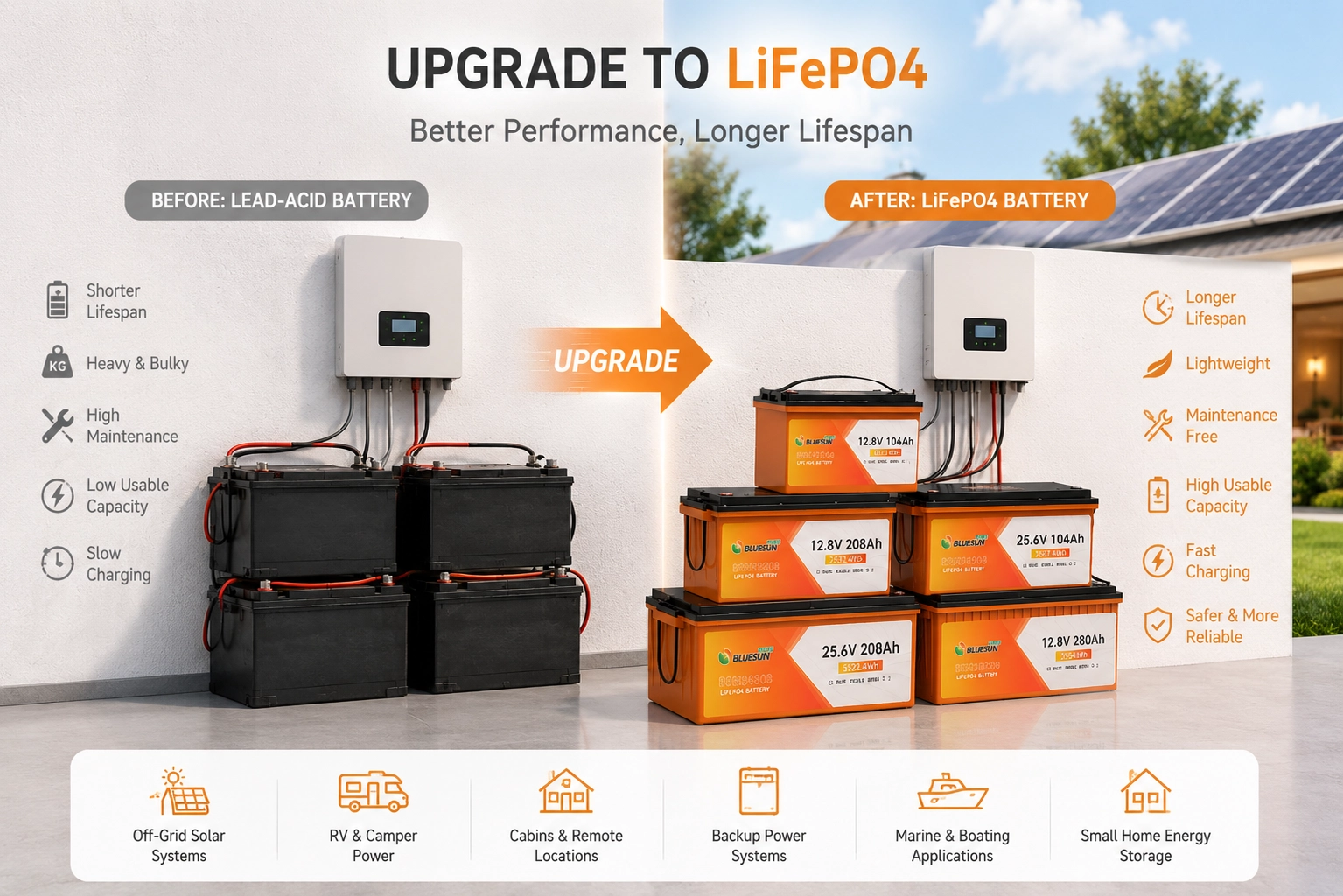
Many solar users are upgrading older lead-acid battery systems to LiFePO4 technology for improved reliability and longer lifespan.
Signs Your Solar Battery System May Need an Upgrade
Not every solar system needs to be replaced completely. In many cases, users only upgrade the battery section while keeping the existing solar panels and inverter.
Some common signs include:
Battery runtime becomes noticeably shorter
Charging takes longer than before
Frequent voltage drops under load
Batteries become excessively hot during operation
Maintenance becomes more frequent
System performance becomes unstable after several years of use
For older lead-acid battery banks, these problems often become more noticeable as the system ages.
Why Many Users Move to LiFePO4 Batteries
LiFePO4 batteries have become increasingly common in solar energy storage because they offer several practical advantages for long-term operation.
Longer cycle life
Higher usable capacity
Lower maintenance requirements
Faster charging efficiency
Lighter weight
More stable performance over time
For solar systems that charge and discharge every day, these advantages can make a noticeable difference during long-term use.
Usable Capacity Often Feels Very Different
One reason many users upgrade is that older lead-acid batteries often cannot provide their full rated capacity during real operation.
To protect battery lifespan, lead-acid systems are usually operated with shallower discharge levels.
LiFePO4 batteries generally support deeper discharge capability, allowing users to access more usable energy from the same battery size.
This can improve backup runtime without requiring a much larger battery bank.
Charging Efficiency Improves Daily Solar Performance
Battery charging efficiency affects how much solar energy can actually be stored and used.
In many older systems, energy losses during charging become more noticeable over time.
LiFePO4 batteries generally support more efficient charging and discharging performance, which can help improve the overall efficiency of the solar system.
For systems that cycle daily, this becomes increasingly important over the long term.
Weight and Installation Become Easier
Traditional lead-acid batteries are often large and heavy, especially in systems with multiple batteries connected together.
Many RV owners, marine users, and off-grid installers now prefer lithium batteries because they are significantly lighter and easier to handle.
For some older solar systems, reducing battery weight can also simplify future maintenance and system expansion.
Before Upgrading, Compatibility Still Matters
Although LiFePO4 batteries offer many advantages, compatibility should still be checked before upgrading an older solar system.
Important factors include:
Inverter compatibility
Charging voltage settings
Battery management system (BMS)
Solar charge controller configuration
System voltage (12V / 24V / 48V)
In some cases, small system adjustments may be needed to optimize battery performance after upgrading.
If you want to better understand the practical differences between traditional lead-acid batteries and lithium batteries, you can also read our article about Lead-Acid vs Lithium-Ion Batteries for Solar Storage.
Which Solar Systems Commonly Upgrade First?
Battery upgrades are becoming increasingly common in:
Off-grid solar systems
RV and camper solar setups
Backup power systems
Remote cabins
Marine power systems
Small residential solar storage projects
In these applications, users often want longer runtime, lower maintenance, and more stable long-term operation.
Why the Market Is Gradually Shifting
Lead-acid batteries are still used in some situations today, especially where low upfront cost remains the main priority.
However, more solar users are now looking beyond initial purchase price and paying closer attention to long-term performance and maintenance cost.
This is one reason why many systems are gradually moving toward lead-acid replacement LiFePO4 batteries for solar and off-grid energy storage applications.
For many users, upgrading the battery system is one of the simplest ways to improve the overall reliability and usability of an existing solar setup without rebuilding the entire system.


 EN
EN  ES
ES  FR
FR  DE
DE  RU
RU  ZH
ZH  AR
AR  RO
RO  BG
BG