
 AR
AR  EN
EN  ES
ES  FR
FR  DE
DE  RU
RU  ZH
ZH  RO
RO  BG
BG 
Remote villages, farms, construction sites, clinics, schools, and island projects often face unreliable utility infrastructure, frequent outages, or no grid connection at all.
For years, diesel generators were the most common solution. But rising fuel costs, transportation difficulties, maintenance requirements, and noise pollution are pushing more projects toward solar energy alternatives.
That is why off-grid solar systems are becoming increasingly important for remote area power supply.
Off-Grid Solar Systems Generate and Store Their Own Electricity
Unlike standard grid-tied solar systems, off-grid systems operate independently by combining solar generation with battery energy storage for continuous power supply.
What Is an Off-Grid Solar System?
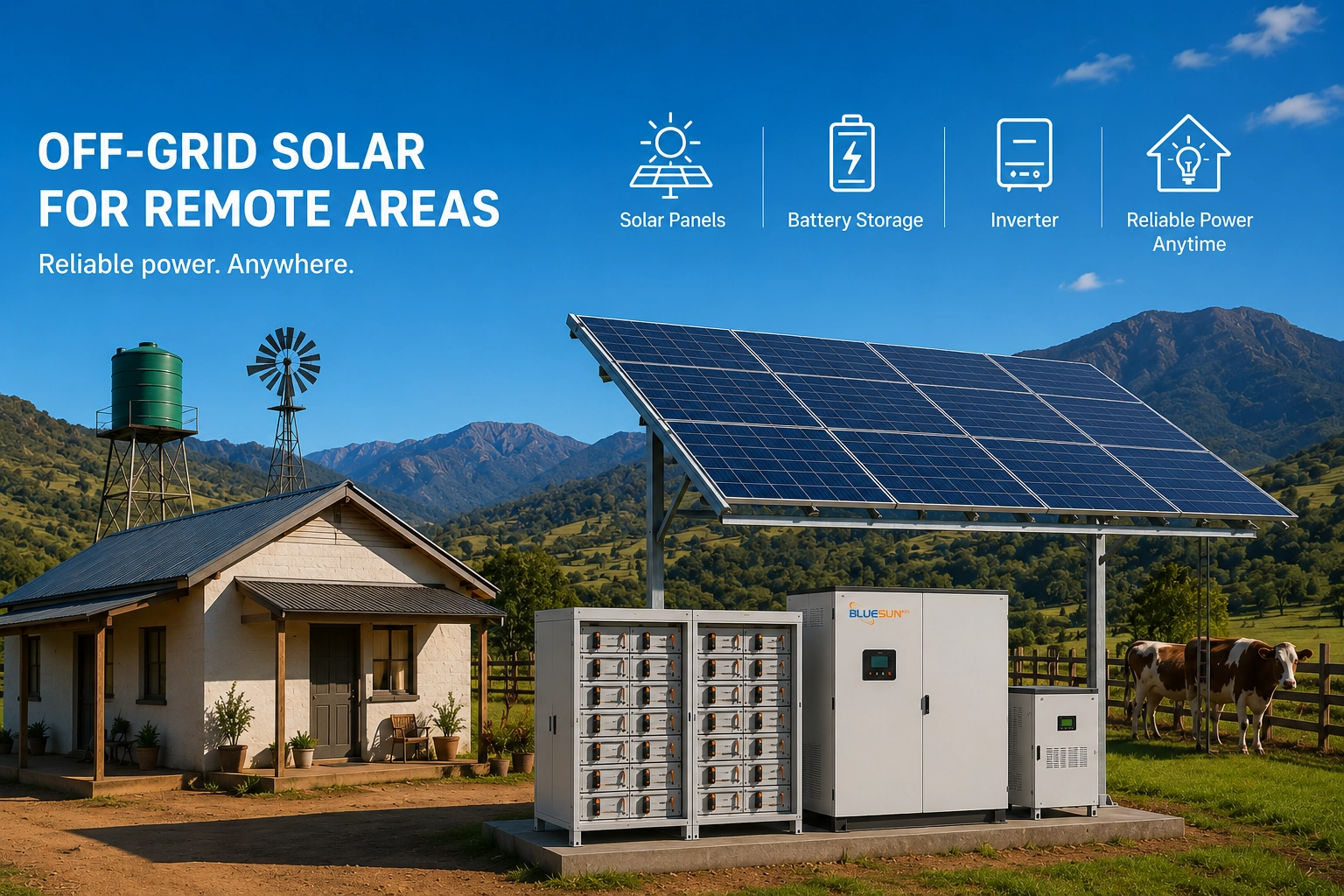
An off-grid solar system is a standalone power system that generates electricity from solar panels and stores excess energy in batteries for later use.
Unlike on-grid systems, off-grid systems do not depend on the public utility network.
A typical off-grid solar power system usually includes:
- الألواح الشمسية
- Hybrid or off-grid inverter
- Battery storage system
- Charge controller
- Monitoring and protection systems
During the daytime, solar panels generate electricity to power equipment and charge the batteries. At night or during cloudy conditions, stored battery energy continues supplying electricity.
Why Off-Grid Solar Is Becoming More Popular
In many remote regions, extending utility grid infrastructure is expensive and sometimes unrealistic.
Off-grid solar systems offer an alternative that is cleaner, quieter, and often more economical over the long term.
Compared with diesel generators, solar-plus-storage systems provide several advantages:
- Lower long-term operating costs
- Reduced fuel dependency
- Lower maintenance requirements
- Quieter operation
- Cleaner and more sustainable energy
As lithium battery prices continue improving and energy storage technology becomes more advanced, off-grid solar is becoming increasingly practical for both residential and commercial applications.
Why Battery Storage Is Critical in Off-Grid Systems
Battery storage is one of the most important parts of any off-grid solar system.
Without batteries, solar panels can only provide electricity during sunlight hours.
Battery systems allow energy generated during the day to be stored and used at night, during cloudy weather, or during periods of higher electricity demand.
In remote locations where reliable power is critical, battery storage directly affects system stability and energy independence.
Common Applications for Off-Grid Solar Systems
Off-grid solar solutions are now widely used across many industries and remote environments.
Common applications include:
- Remote homes and villages
- Farms and agricultural irrigation systems
- Schools and medical clinics
- Telecommunication stations
- Mining and construction sites
- Island and mountain projects
Different projects require different system sizes depending on electricity demand, operating hours, and local weather conditions.
How Modern Off-Grid Systems Are Becoming Easier to Deploy
Traditional off-grid systems often required complicated on-site installation and equipment integration.
Today, many projects are shifting toward integrated and pre-engineered energy storage systems that simplify deployment and maintenance.
Modern off-grid solar systems can combine solar generation, battery storage, inverter systems, and intelligent monitoring into a more streamlined solution.
For larger commercial applications, integrated all-in-one energy storage systems can also reduce installation complexity and improve long-term operational management.
What Factors Affect Off-Grid System Design?
Designing an off-grid solar system requires more than simply choosing solar panels.
Several factors affect overall system sizing and configuration, including:
- Daily electricity consumption
- Nighttime power demand
- Backup days required
- Local sunlight conditions
- Future energy expansion plans
Because remote projects often have limited backup options, system reliability and battery capacity planning become especially important.
Final Thoughts
Off-grid solar systems are becoming one of the most practical energy solutions for remote areas around the world.
By combining solar generation with battery storage, these systems can provide stable electricity without depending on expensive or unreliable utility infrastructure.
As solar and energy storage technology continues advancing, off-grid systems are helping more communities, farms, schools, and businesses gain access to cleaner and more reliable energy.