首頁 / 部落格

Why Are Energy Storage Containers So Expensive?

Learn why energy storage containers cost significantly more than standard containers, including BESS design, thermal management, fire protection, electrical systems, and certification requirements.

17/ 2025.7 月
At first glance, an energy storage container may look similar to a standard shipping container. That often leads to the same question: Why is a battery energy storage container so much more expensive than a normal container? The answer is simple — a modern BESS container is not just a steel box used for transportation. It is a highly integrated energy infrastructure system designed to support battery safety, thermal stability, electrical protection, long-term operation, and transportation compliance under demanding conditions.

A BESS Container Is a Complete Energy System

Unlike ordinary shipping containers designed mainly for cargo transportation, energy storage containers must support continuous electrical operation, equipment protection, thermal management, and long-term system reliability.
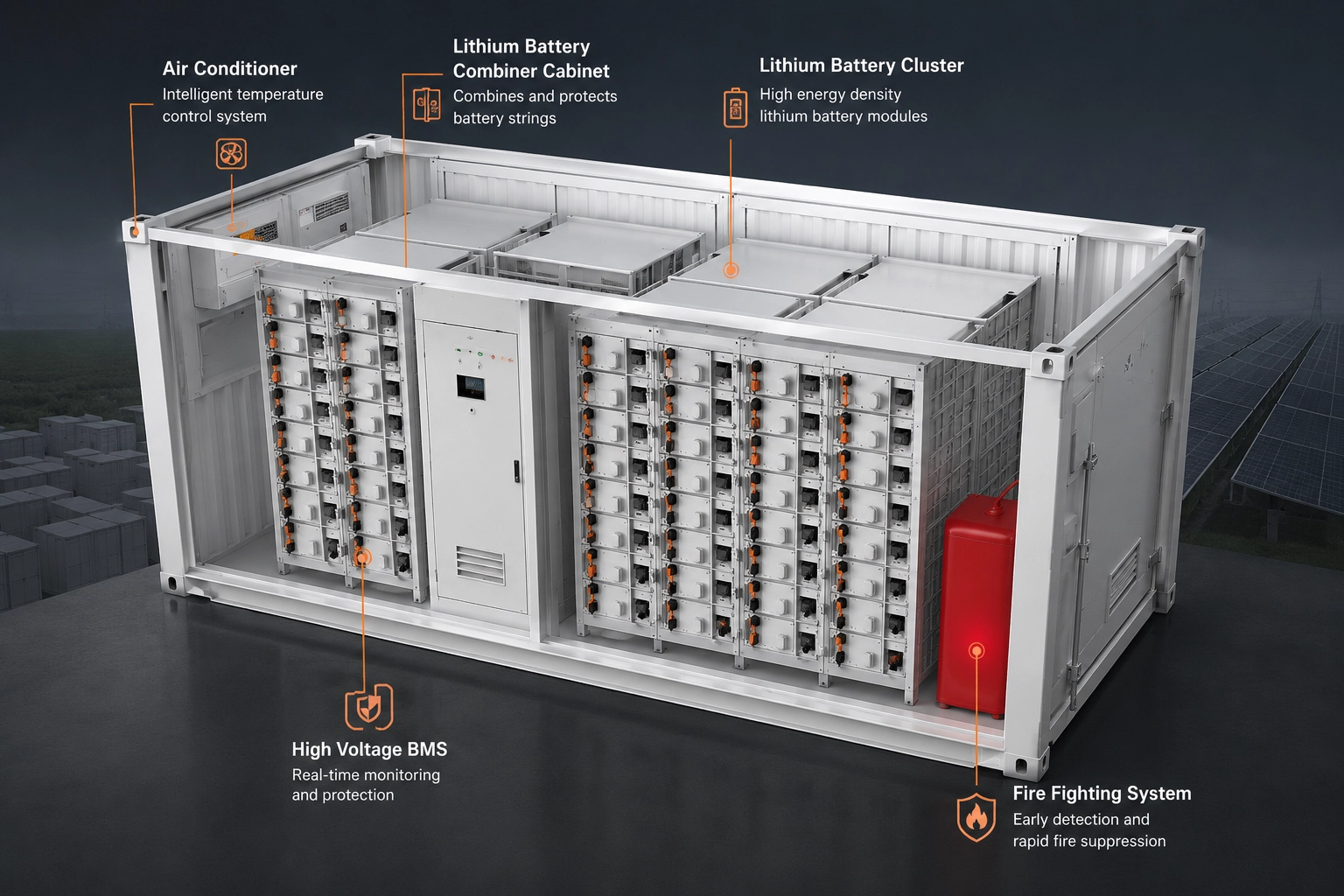
Containerized battery energy storage system for commercial and utility applications
Modern energy storage containers integrate batteries, thermal management, electrical systems, and fire protection into one complete solution.

The Structure Is Far More Complex Than a Standard Container

Traditional shipping containers are mainly designed for transportation and stacking strength. Internally, the structure is relatively simple because the container only needs to carry cargo. Energy storage containers are completely different. A BESS container must safely support heavy battery racks, PCS equipment, electrical cabinets, cable systems, cooling infrastructure, and monitoring equipment inside a confined space. The structural frame must remain stable during transportation, lifting, vibration, and long-term operation. Depending on the project, the container may also require:
  • Corrosion-resistant steel structures
  • Thermal insulation layers
  • Explosion pressure relief systems
  • Waterproof and dustproof protection
  • Dedicated ventilation channels
This already makes the engineering complexity significantly higher than a normal shipping container.

Thermal Management Adds Significant Engineering Cost

Lithium battery systems continuously generate heat during charging and discharging cycles. If temperatures become unstable, battery performance, lifespan, and safety may all be affected. That is why thermal management is one of the most important parts of modern containerized energy storage system design. Depending on system size and application, thermal management may include:
  • Industrial air conditioning systems
  • Forced-air ventilation
  • Fresh air circulation systems
  • Temperature monitoring sensors
  • Liquid cooling systems
Large commercial and utility-scale projects increasingly use liquid cooling technology because it improves temperature consistency and energy density. For example, advanced systems such as the 500kW 2MWh BESS container energy storage system are designed with integrated thermal management and high-density energy storage architecture for large-scale commercial applications.
Why thermal management matters: Battery performance is heavily affected by temperature consistency. Poor cooling design can reduce system lifespan and increase operational risks.

Fire Protection Is a Core Part of BESS Design

One of the biggest differences between ordinary containers and energy storage containers is integrated fire safety engineering. Because lithium battery systems store large amounts of energy, early fire detection and rapid suppression systems are critical. Modern BESS containers may include:
  • Smoke detection systems
  • Temperature monitoring sensors
  • Gas detection systems
  • Automatic fire suppression systems
  • Explosion-proof ventilation design
In many projects, the fire protection system itself represents a major engineering and certification cost.

Electrical Integration Is Much More Advanced

An energy storage container integrates far more than battery modules. Inside the container, multiple electrical systems must operate together safely and continuously, including:
  • Battery racks
  • BMS systems
  • PCS equipment
  • Monitoring systems
  • Protection devices
  • Communication systems
All wiring, communication infrastructure, electrical protection systems, and power distribution architecture must be carefully engineered and tested before deployment. This level of integration is far more complex than a conventional shipping container.

Transportation and Certification Requirements Increase Costs

Shipping a containerized battery system internationally is much more complicated than shipping normal cargo. Depending on the destination market and project requirements, BESS containers may require:
  • Dangerous goods transportation certification
  • Marine transportation compliance
  • Classification society certification
  • Electrical safety testing
  • Environmental compliance certification

These requirements increase both manufacturing complexity and overall project cost.

Why Reliability Matters More Than Lowest Price

For commercial and utility-scale projects, long-term operational reliability is often more important than minimizing initial equipment cost. A poorly designed container may create risks related to temperature imbalance, equipment failure, safety incidents, or unexpected downtime. That is why many EPC companies and project developers focus heavily on cooling performance, structural stability, electrical integration quality, and long-term operational safety when selecting energy storage systems. Integrated solutions such as the 250kW 803kWh all-in-one containerized energy storage system are designed to simplify deployment while combining energy storage, electrical integration, and system management into one complete platform.

最終想法

An energy storage container is far more than a simple battery box. It is a complete infrastructure system designed for safe, stable, and efficient long-term energy operation. From structural engineering and thermal management to fire protection, electrical integration, and transportation certification, every part of the system contributes to the overall cost and long-term project value. When evaluating a BESS container, focusing only on the initial price often overlooks the engineering complexity and operational reliability required for modern energy storage projects.
×

留下訊息

您的最佳 PV 供應商 Bluesun 提供全面的太陽能光電解決方案套件
可優化廣泛的專案應用。

留下訊息

取得您的太陽能解決方案