
 DE
DE  EN
EN  ES
ES  FR
FR  RU
RU  ZH
ZH  AR
AR  RO
RO  BG
BG 
A BESS Container Is a Complete Energy System
Unlike ordinary shipping containers designed mainly for cargo transportation, energy storage containers must support continuous electrical operation, equipment protection, thermal management, and long-term system reliability.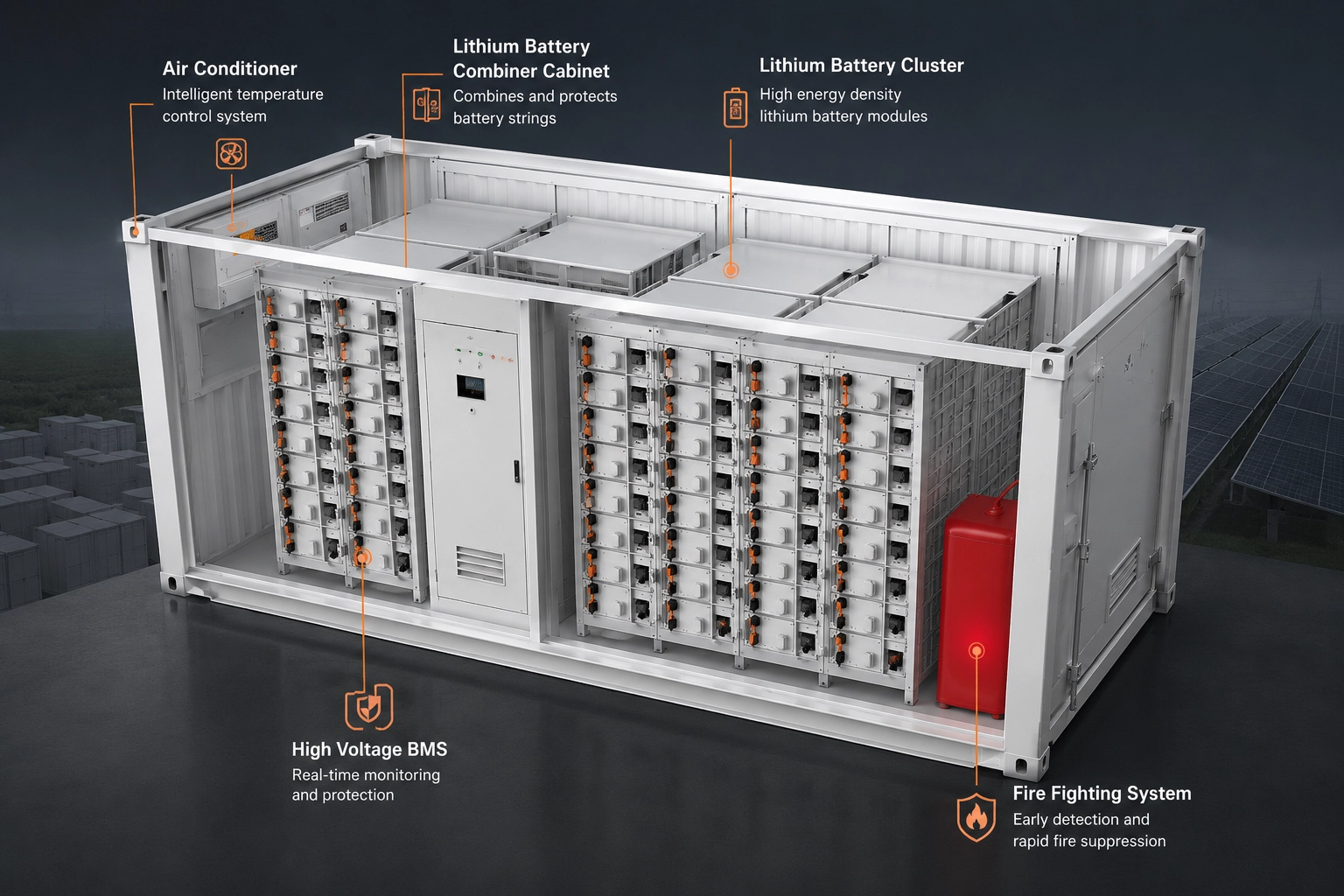
The Structure Is Far More Complex Than a Standard Container
Traditional shipping containers are mainly designed for transportation and stacking strength. Internally, the structure is relatively simple because the container only needs to carry cargo. Energy storage containers are completely different. A BESS container must safely support heavy battery racks, PCS equipment, electrical cabinets, cable systems, cooling infrastructure, and monitoring equipment inside a confined space. The structural frame must remain stable during transportation, lifting, vibration, and long-term operation. Depending on the project, the container may also require:- Corrosion-resistant steel structures
- Thermal insulation layers
- Explosion pressure relief systems
- Waterproof and dustproof protection
- Dedicated ventilation channels
Thermal Management Adds Significant Engineering Cost
Lithium battery systems continuously generate heat during charging and discharging cycles. If temperatures become unstable, battery performance, lifespan, and safety may all be affected. That is why thermal management is one of the most important parts of modern containerized energy storage system design. Depending on system size and application, thermal management may include:- Industrial air conditioning systems
- Forced-air ventilation
- Fresh air circulation systems
- Temperature monitoring sensors
- Liquid cooling systems
Why thermal management matters: Battery performance is heavily affected by temperature consistency. Poor cooling design can reduce system lifespan and increase operational risks.
Fire Protection Is a Core Part of BESS Design
One of the biggest differences between ordinary containers and energy storage containers is integrated fire safety engineering. Because lithium battery systems store large amounts of energy, early fire detection and rapid suppression systems are critical. Modern BESS containers may include:- Smoke detection systems
- Temperature monitoring sensors
- Gas detection systems
- Automatic fire suppression systems
- Explosion-proof ventilation design
Electrical Integration Is Much More Advanced
An energy storage container integrates far more than battery modules. Inside the container, multiple electrical systems must operate together safely and continuously, including:- Battery racks
- BMS systems
- PCS equipment
- Monitoring systems
- Protection devices
- Communication systems
Transportation and Certification Requirements Increase Costs
Shipping a containerized battery system internationally is much more complicated than shipping normal cargo. Depending on the destination market and project requirements, BESS containers may require:- Dangerous goods transportation certification
- Marine transportation compliance
- Classification society certification
- Electrical safety testing
- Environmental compliance certification