
 ZH
ZH  EN
EN  ES
ES  FR
FR  DE
DE  RU
RU  AR
AR  RO
RO  BG
BG 
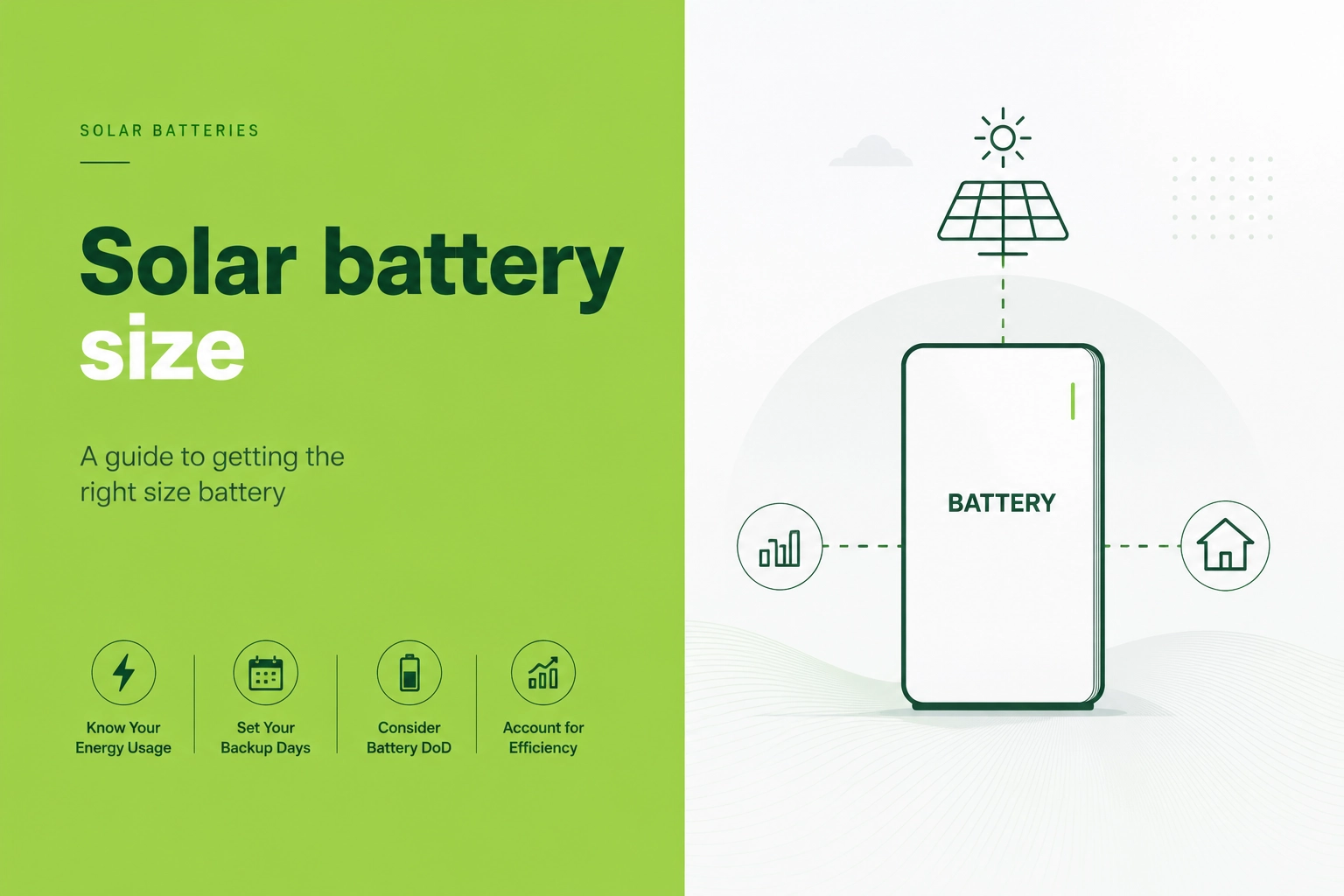
Battery sizing is one of the most important parts of a solar energy system.
A battery system that is too small may not provide enough backup power during outages or nighttime operation, while an oversized system can increase project costs unnecessarily.
This guide explains how to estimate the right battery capacity based on daily energy usage, backup time, battery type, and overall system efficiency.
Battery Sizing Is About Matching Real Energy Demand
The best battery system is not always the largest one. A properly designed energy storage system should match your actual electricity usage, backup requirements, and future expansion plans.
1. Understand Your Daily Electricity Consumption
The first step is understanding how much electricity your home or business uses every day.
You can estimate this using electricity bills or by checking the power consumption of major appliances and equipment.
Daily electricity usage is usually measured in kilowatt-hours (kWh).
For example, if your home consumes around 20kWh per day, the battery storage system should be designed around that daily demand.
2. Decide How Much Backup Time You Need
Battery storage requirements also depend on how long the system needs to operate without solar generation.
Some users only need a few hours of backup power, while others may require multiple days of energy storage for off-grid or unstable-grid applications.
- 1 Day Backup: Suitable for stable-grid areas and basic emergency backup.
- 2 Days Backup: Common for residential solar systems with moderate outages.
- 3–5 Days Backup: More suitable for remote areas and off-grid systems.
3. Understand Battery Depth of Discharge (DoD)
Not all battery capacity is fully usable.
Different battery technologies support different depth-of-discharge levels.
- Lithium / LiFePO4 batteries: Usually support 80–90% DoD.
- Lead-acid batteries: Usually support around 50% DoD.
This means a 10kWh battery may only provide 5–9kWh of usable energy depending on battery type.
Modern lithium battery systems are becoming increasingly popular because they provide higher usable capacity, longer cycle life, and lower maintenance requirements.
For residential and commercial projects, lithium solar battery systems are now widely used for backup power and energy storage applications.
4. Include System Efficiency Losses
Energy losses happen during charging, discharging, inverter conversion, and wiring transmission.
Because of this, battery sizing calculations should include an efficiency factor.
For most solar systems, overall efficiency is typically estimated at around 90%.
Battery Capacity = Daily Usage × Backup Days ÷ DoD ÷ System Efficiency
Example Battery Sizing Calculation
Let’s assume a home uses 20kWh of electricity per day and requires 3 days of backup power.
- Daily energy usage: 20kWh
- Backup days: 3
- Battery type: Lithium battery (90% DoD)
- System efficiency: 90%
The estimated battery requirement would be:
This means the project would require approximately 74kWh of battery storage capacity to meet the target backup requirement.
Solar Battery Sizing Calculator
You can use the calculator below to estimate the recommended battery capacity for your solar project.
Estimate Your Battery Capacity
Quick Battery Capacity Reference
| Daily Energy Usage | Suggested Battery Storage |
|---|---|
| Less than 10kWh | 5–10kWh Battery System |
| 10–30kWh | 15–30kWh Lithium Battery |
| 30–100kWh | 50–100kWh Commercial ESS |
| 100kWh+ | Containerized Energy Storage System |
Why Proper Battery Sizing Matters
Correct battery sizing helps improve long-term system stability and investment efficiency.
An undersized battery system may experience frequent deep discharge and reduced backup capability, while oversized systems can increase project costs without delivering proportional benefits.
Battery sizing should also consider future electricity demand, seasonal weather conditions, and possible system expansion.
最終想法
There is no universal battery size that fits every solar project.
The correct storage capacity depends on daily electricity usage, backup requirements, battery technology, system efficiency, and long-term energy goals.
Before choosing a battery system, it is always better to estimate real energy demand carefully instead of simply selecting the largest available capacity.