Battery Storage vs Diesel Generators: Which Backup Power Solution Makes More Sense?
Compare battery energy storage systems and diesel generators for backup power. Learn the differences in operating cost, maintenance, reliability, and long-term value for commercial applications.
01/ 2026.6 月
When businesses think about backup power, diesel generators are often the first option that comes to mind.They have been used for decades in factories, warehouses, commercial buildings, and critical infrastructure projects around the world.
However, battery energy storage systems (ESS) are changing the conversation.
As battery costs continue falling and energy management technology improves, more companies are beginning to compare battery storage directly against traditional diesel generators.
The question is no longer whether battery storage works. The real question is whether it makes more sense for a specific application.
Backup Power Is No Longer Just About Emergency Use
Many businesses today expect backup systems to do more than provide power during outages. They also want solutions that help reduce energy costs, improve operational flexibility, and support sustainability goals.
Battery storage and diesel generators serve similar backup functions but offer very different operational benefits.
How Diesel Generators Work
Diesel generators produce electricity by burning fuel whenever power is needed.
They are widely used because they can deliver large amounts of power and operate for extended periods as long as fuel is available.
For locations with frequent outages or limited grid access, diesel generators have traditionally been the preferred solution.
However, operating costs and maintenance requirements can become significant over time.
How Battery Storage Systems Work
Battery storage systems store electricity and discharge it when needed.
The stored energy may come from the grid, solar panels, or other energy sources.
Unlike generators, batteries do not require fuel combustion during operation.
This allows them to provide instant power with minimal noise and virtually no local emissions.
Modern BESS solutions can also support peak shaving, load shifting, and solar self-consumption strategies in addition to backup power.
Response Time: Batteries Have a Clear Advantage
One major difference between the two technologies is response speed.
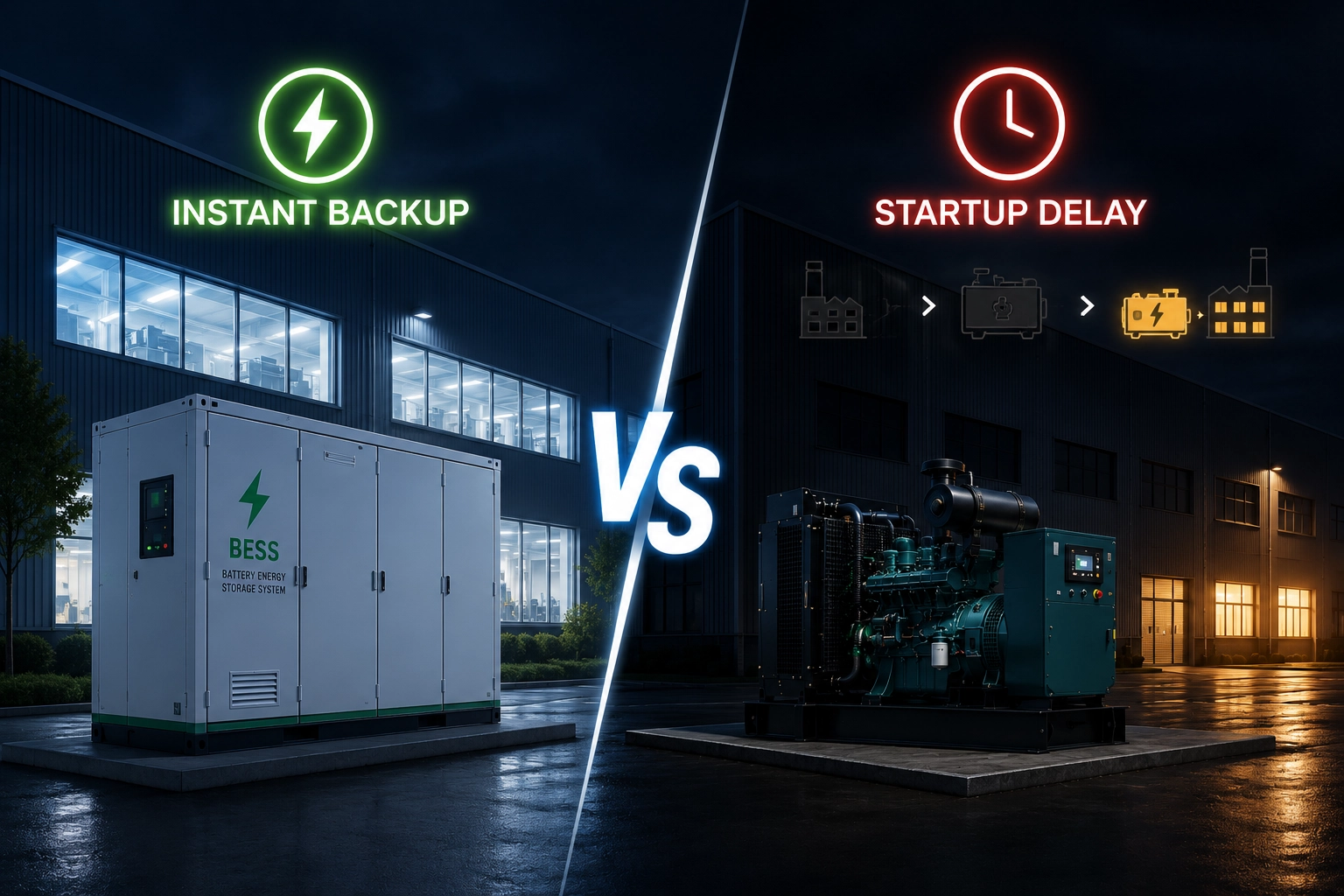
Battery systems can switch from standby mode to full output almost instantly.
Diesel generators typically require a startup sequence before reaching stable operation.
For sensitive equipment such as data centers, communication systems, and automated production lines, this difference can be important.
Battery storage systems can provide backup power almost instantly when grid interruptions occur.
Operating Costs Tell a Different Story
The initial purchase price does not tell the whole story.
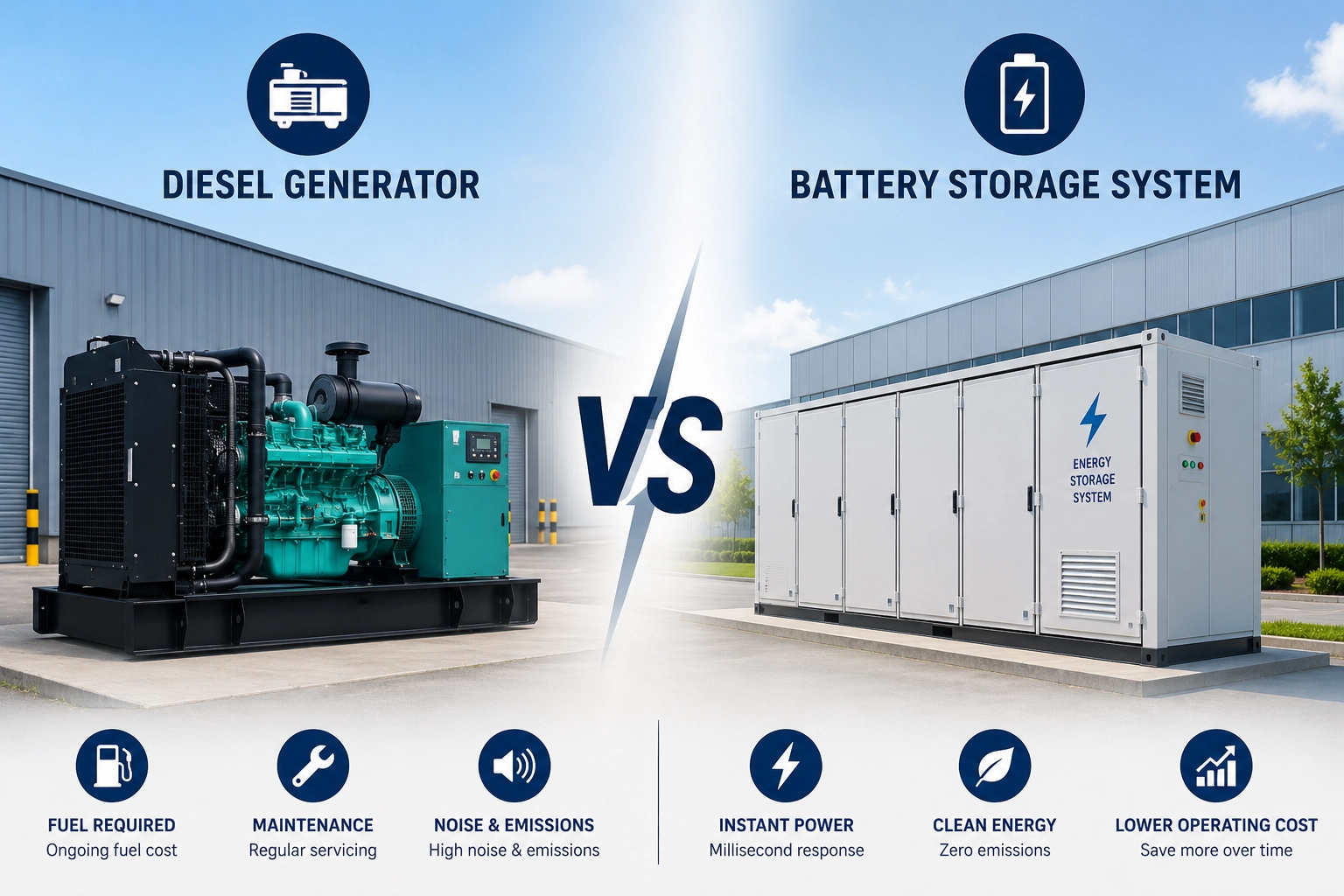
Diesel generators require ongoing fuel purchases, regular servicing, oil changes, and mechanical maintenance.
Fuel costs can also fluctuate significantly over the lifetime of the equipment.
Battery storage systems generally have lower day-to-day operating requirements and can create additional value through energy management applications.
In many commercial projects, batteries are not only backup systems—they become active assets used every day.
Which Solution Is Better for Daily Use?
This is where battery storage often gains an advantage.
A diesel generator typically sits idle until a power outage occurs.
A battery system can provide value every day by:
Battery storage is not automatically the best choice for every project.
Generators still have advantages in applications that require very long backup durations or where fuel logistics are already well established.
Remote mining sites and locations with extended grid outages may still rely heavily on diesel generation.
In some projects, hybrid systems that combine batteries and generators can offer the best balance between reliability and operating cost.
The Decision Depends on the Application
For short-duration outages, energy management, and daily operational savings, battery storage often provides more flexibility and long-term value.
For extended backup requirements measured in days rather than hours, generators may still play an important role.
The best solution is often determined by energy costs, outage frequency, load profile, and business priorities.
Backup Power Is Becoming Smarter
Businesses today are increasingly looking beyond traditional backup systems.
Instead of investing in equipment that only operates during emergencies, many are choosing solutions that create value every day.
That shift is one reason battery storage continues gaining momentum across commercial and industrial applications worldwide.


 ZH
ZH  EN
EN  ES
ES  FR
FR  DE
DE  RU
RU  AR
AR  RO
RO  BG
BG