
 ZH
ZH  EN
EN  ES
ES  FR
FR  DE
DE  RU
RU  AR
AR  RO
RO  BG
BG 
One of the most common questions we hear from factory owners, commercial building operators, and project developers is:
“How long will it take for a battery storage system to pay for itself?”
Unfortunately, there is no universal answer.
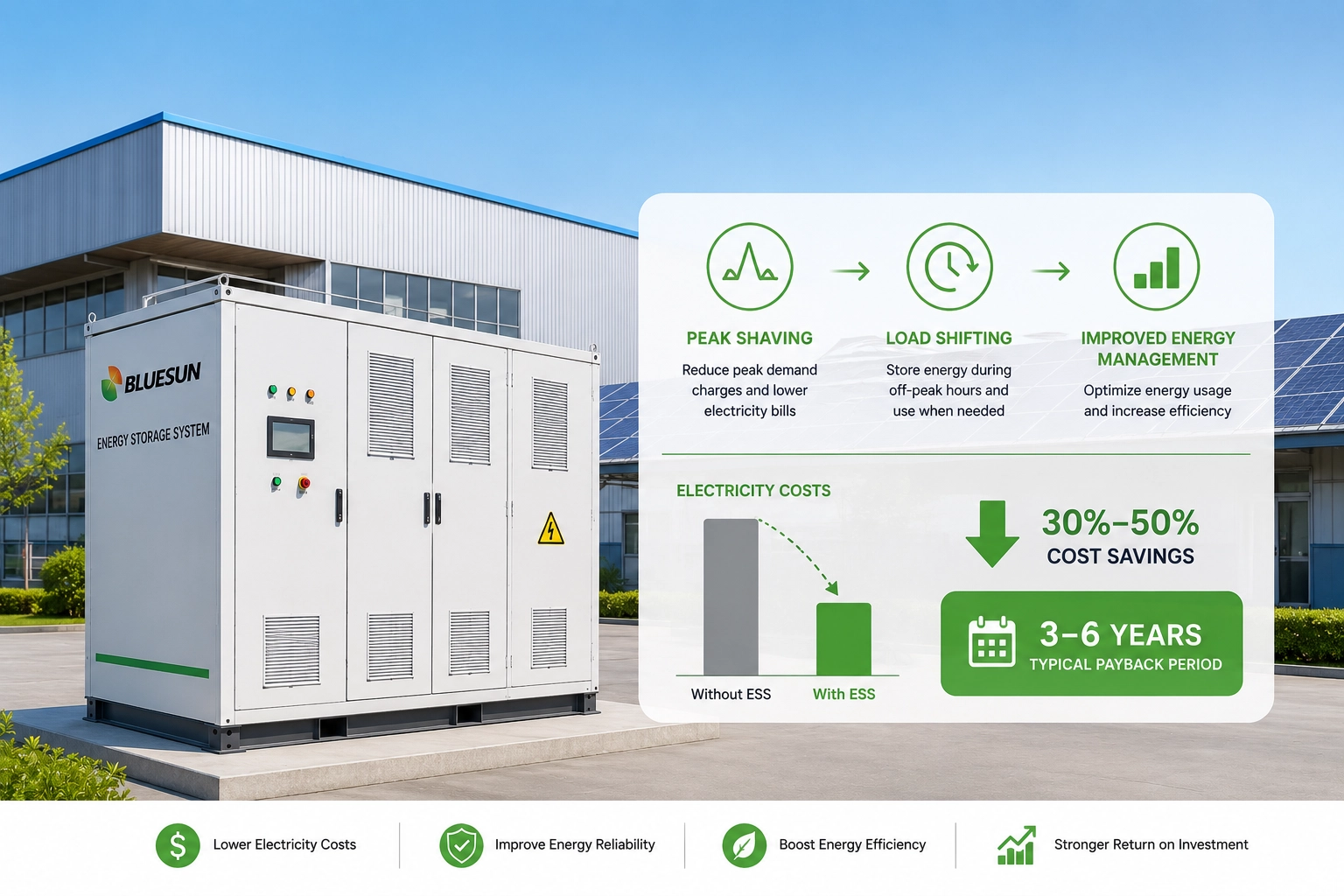
We have seen commercial energy storage projects achieve payback in less than four years, while others may take seven years or longer.
The difference is rarely the battery itself. More often, it comes down to electricity pricing, operating patterns, and how the system is used after installation.
Not All ESS Projects Generate Savings the Same Way
Two businesses can install similar battery systems and end up with completely different financial results depending on their electricity tariffs and energy usage patterns.
Why Two Similar Factories Can Have Very Different Payback Periods
Imagine two factories installing the same battery storage system.
The first factory operates mostly during expensive daytime electricity periods and regularly experiences high peak demand charges.
The second factory consumes most of its electricity during off-peak hours when tariffs are already relatively low.
Although both facilities use the same equipment, the first factory may recover its investment much faster simply because there are more opportunities to reduce energy costs.
This is why project economics matter more than battery specifications alone.
Peak Demand Charges Often Drive the Fastest Returns
Many businesses focus only on the price per kilowatt-hour of electricity.
However, in many countries, utilities also charge based on the highest power demand recorded during the billing cycle.
If you’re unfamiliar with how these charges work, read our guide on what demand charges are and how ESS can reduce them.
A short period of high electricity usage can increase monthly electricity bills significantly.
This is where energy storage becomes valuable.
Instead of drawing all power from the grid during peak demand periods, the battery can discharge and support the load, helping reduce demand charges.
For many commercial projects, peak shaving generates a large portion of annual savings.
Solar + Storage Usually Improves Project Economics
Battery storage becomes even more effective when combined with solar generation.
During the day, excess solar energy can be stored instead of being exported to the grid.
That stored energy can then be used later when electricity prices are higher or solar production has stopped.
This improves solar self-consumption and increases the value of every kilowatt-hour generated by the PV system.
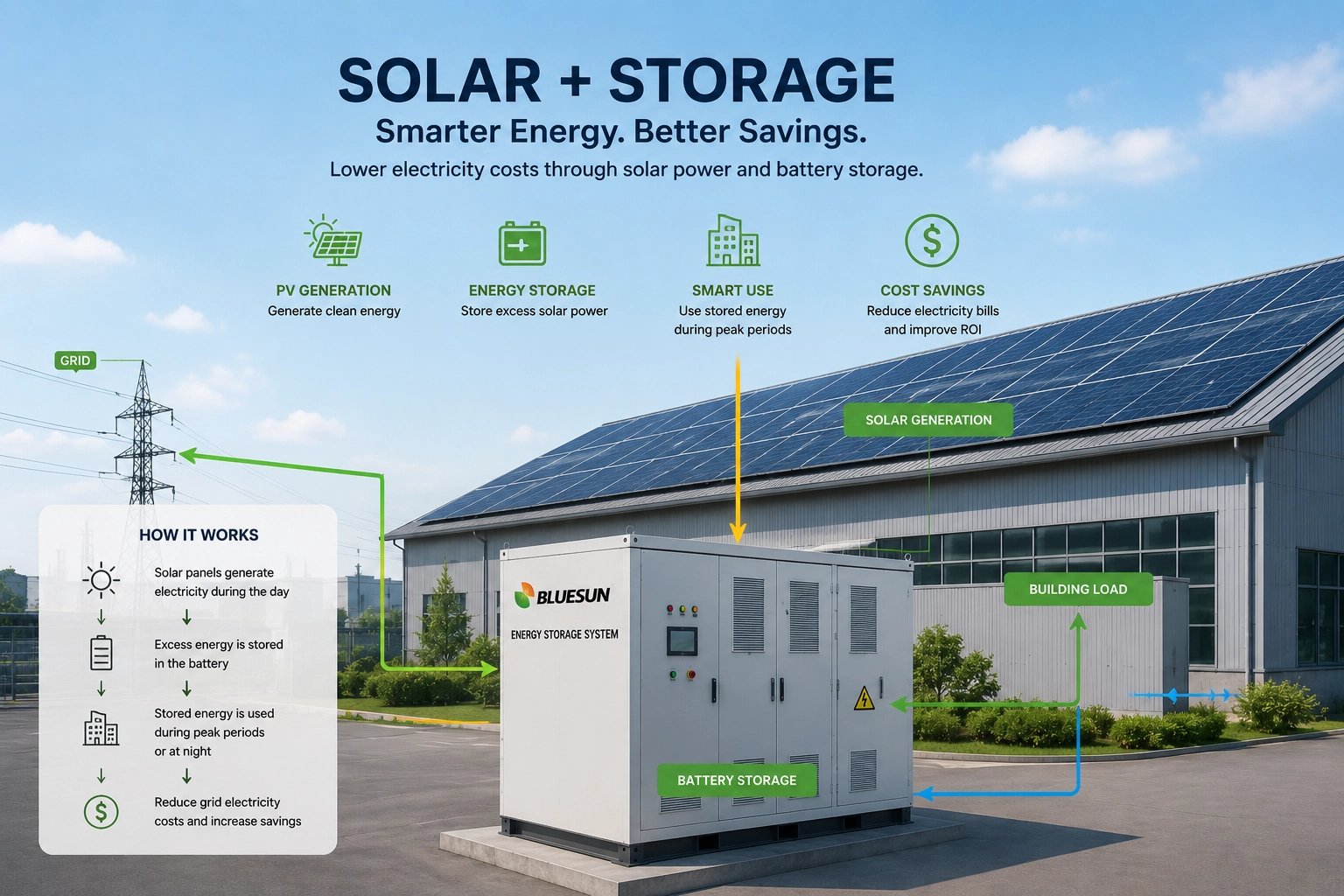
Many modern commercial & industrial BESS solutions are designed around this strategy.
Battery Utilization Matters More Than Battery Size
A larger battery does not automatically mean a better return on investment.
In fact, oversized systems are one of the most common reasons payback periods become longer than expected.
A battery that cycles regularly every day often creates more value than a larger battery that spends most of its time sitting idle.
The goal is not to install the biggest system possible. The goal is to install a system that matches the site’s actual energy profile.
What Else Affects ESS ROI?
Several factors can influence project economics:
- Local electricity tariffs
- Demand charge structures
- Daily operating schedule
- Solar generation profile
- Battery cycling frequency
- System sizing
- Government incentives and subsidies
This is why two projects with identical battery capacities can still achieve very different financial outcomes.
Payback Is Important, But It Is Not the Only Benefit
While ROI is often the first metric businesses evaluate, many project owners also consider operational benefits.
Energy storage can help improve:
- Power reliability
- Protection against outages
- Energy independence
- Long-term electricity cost stability
- Renewable energy utilization
For some factories, avoiding a single production interruption may be worth more than months of electricity savings.
There Is No Universal Payback Period
A commercial ESS is not a product that automatically generates a fixed return.
The same battery system can deliver completely different results depending on where and how it is used.
For businesses facing high electricity prices, demand charges, or grid instability, energy storage often becomes financially attractive much sooner than expected.
The most successful projects are usually not the ones with the biggest batteries. They are the ones designed around real operating conditions and clear energy-saving objectives.
Many of the fastest-paying ESS projects achieve their returns through demand-charge reduction and peak shaving strategies. To better understand this important cost component, read our guide on how demand charges work and how battery storage can reduce them.