
 RO
RO  EN
EN  ES
ES  FR
FR  DE
DE  RU
RU  ZH
ZH  AR
AR  BG
BG 
A system that works well for a home may not be suitable for a factory, office, farm, or commercial building. That’s why understanding how different solar systems work is the first step before choosing equipment.
A Complete Solar Energy System Is About Matching the Right Solution
The best solar system is not always the largest one. A properly designed system should match your electricity demand, backup expectations, and long-term energy goals.
What Is Included in a Complete Solar Energy System?
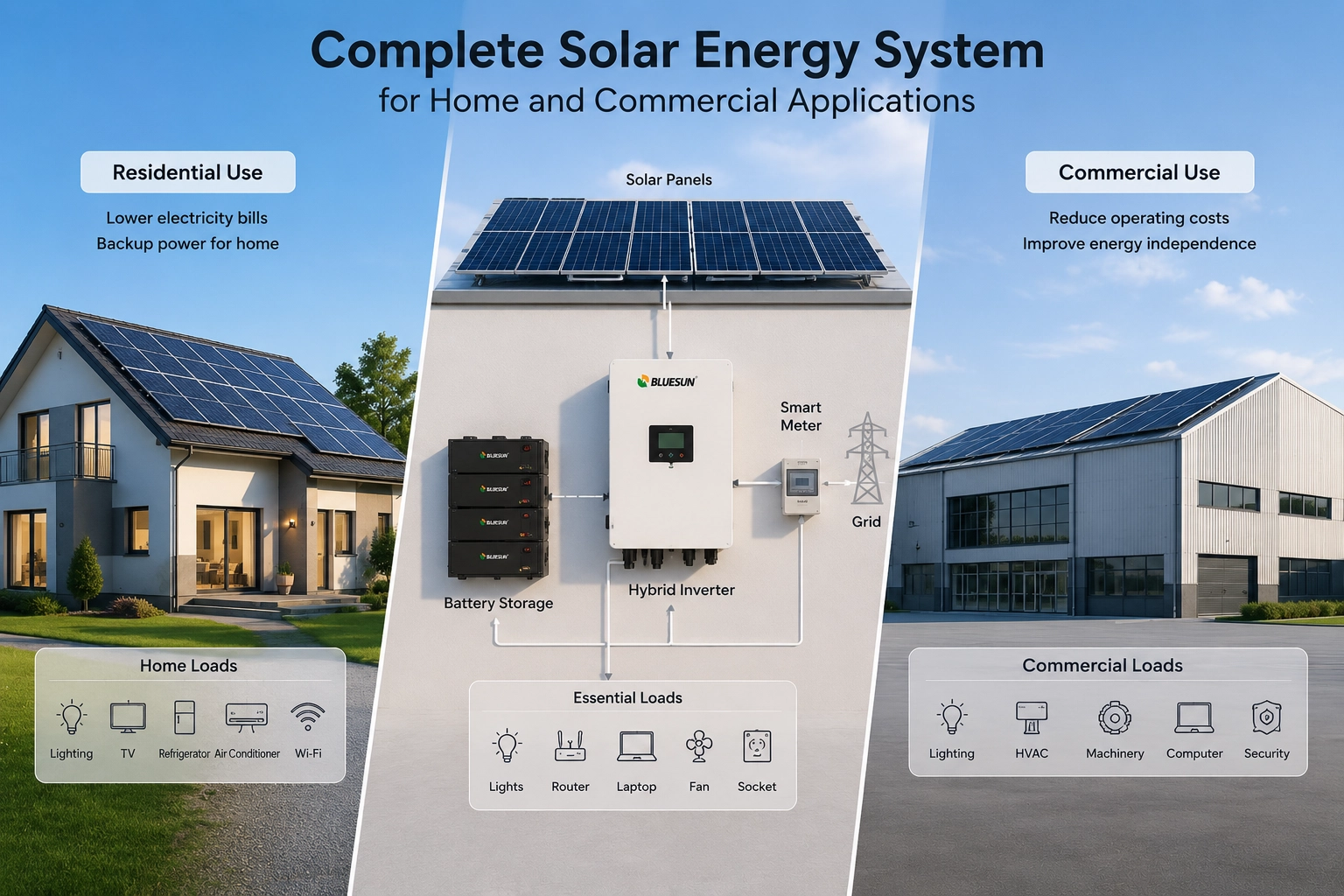
Most solar energy systems include several core components working together as one integrated solution.
- Solar panels: Generate electricity from sunlight.
- Inverter: Converts solar DC power into usable AC electricity.
- Battery storage (optional): Stores excess energy for later use or backup power.
- Mounting structure: Supports safe installation on rooftops or ground areas.
- Protection and monitoring systems: Improve safety and system management.
However, the overall system structure depends on how the electricity will actually be used. That is where system type becomes important.
Before Choosing a Solar System, Ask These Questions
Before selecting a system, it is important to understand your real energy needs.
- Is the local utility grid stable and available?
- Do you mainly want to reduce electricity bills?
- Do you need backup power during outages?
- Will your electricity demand increase in the future?
- Is the project residential, commercial, or industrial?
The answers to these questions usually determine whether an on-grid, off-grid, or energy storage system is the better choice.
On-Grid Solar Systems
On-grid solar systems are connected directly to the utility grid and are commonly used in areas with stable electricity infrastructure.
These systems are mainly designed to reduce electricity bills by using solar energy during the day while still relying on the grid when needed.
For homes, offices, shops, and commercial buildings with stable utility access, on-grid systems are often the most cost-effective starting point for solar adoption.
Since they typically do not require large battery storage capacity, installation costs are usually lower than off-grid systems.
Off-Grid Solar Systems
Off-grid solar systems operate independently from the utility grid and rely on battery storage to provide electricity.
These systems are commonly used in remote areas where grid access is unavailable or unstable, including farms, islands, rural homes, communication stations, and outdoor facilities.
Because the system must provide continuous electricity day and night, battery sizing and backup planning become much more important in off-grid applications.
Compared with on-grid systems, off-grid systems usually require larger battery storage capacity and more careful load management.
Energy Storage Systems and BESS Solutions
In recent years, more residential and commercial users have started adding battery storage to improve energy flexibility and backup capability.
Energy storage systems, also known as BESS (Battery Energy Storage Systems), allow users to store excess solar electricity for later use.
This is especially useful for projects with high evening electricity demand, unstable utility power, peak electricity pricing, or backup power requirements.
For commercial and industrial applications, energy storage systems can also help reduce peak demand charges and improve overall energy management efficiency.
Modern solar-plus-storage systems are becoming increasingly common in factories, warehouses, offices, commercial buildings, and large residential projects.
Home Solar System vs Commercial Solar System
| Application | Recommended System Type | Main Goal |
|---|---|---|
| Residential Home | On-grid or hybrid storage | Reduce electricity bills and improve backup power |
| Remote Home or Farm | Off-grid system | Independent electricity supply |
| Office or Retail Store | On-grid + storage optional | Lower daytime electricity costs |
| Factory or Warehouse | Energy storage system | Peak shaving and energy management |
Think About Future Expansion
Electricity demand often changes after a solar system is installed.
Homes may later add EV chargers, air conditioning systems, or battery storage. Businesses may expand production equipment, refrigeration systems, lighting, or operational space.
That is why many solar systems today are designed with future expansion in mind instead of focusing only on current electricity demand.
Planning ahead can help reduce future upgrade costs and improve long-term system flexibility.
How Bluesun Supports Different Solar System Applications
Bluesun provides solar energy solutions for residential, commercial, and industrial projects, including on-grid systems, off-grid systems, and battery energy storage solutions.
Instead of offering only individual products, Bluesun helps customers match the right system type based on installation conditions, electricity demand, backup requirements, and long-term energy goals.
From residential rooftop systems to commercial energy storage projects, choosing the right system structure is often more important than simply choosing larger equipment.
Final Thoughts
There is no single solar system that fits every project.
The right solution depends on how electricity is used, whether backup power is required, and how much flexibility the project needs in the future.
For some users, an on-grid system may be the simplest and most cost-effective option. For others, off-grid or energy storage systems may provide better long-term value and energy independence.
Understanding these differences is the best starting point for building a reliable and efficient solar energy system.