
 BG
BG  EN
EN  ES
ES  FR
FR  DE
DE  RU
RU  ZH
ZH  AR
AR  RO
RO 
As more homes and businesses switch to solar energy, one question comes up quite often during system planning: should the system only match current electricity usage, or should there be extra capacity for the future?
In real projects, many installers and project developers intentionally design solar systems slightly larger than the current load. The reason is simple — energy demand rarely stays the same for the next 5, 10, or even 20 years.
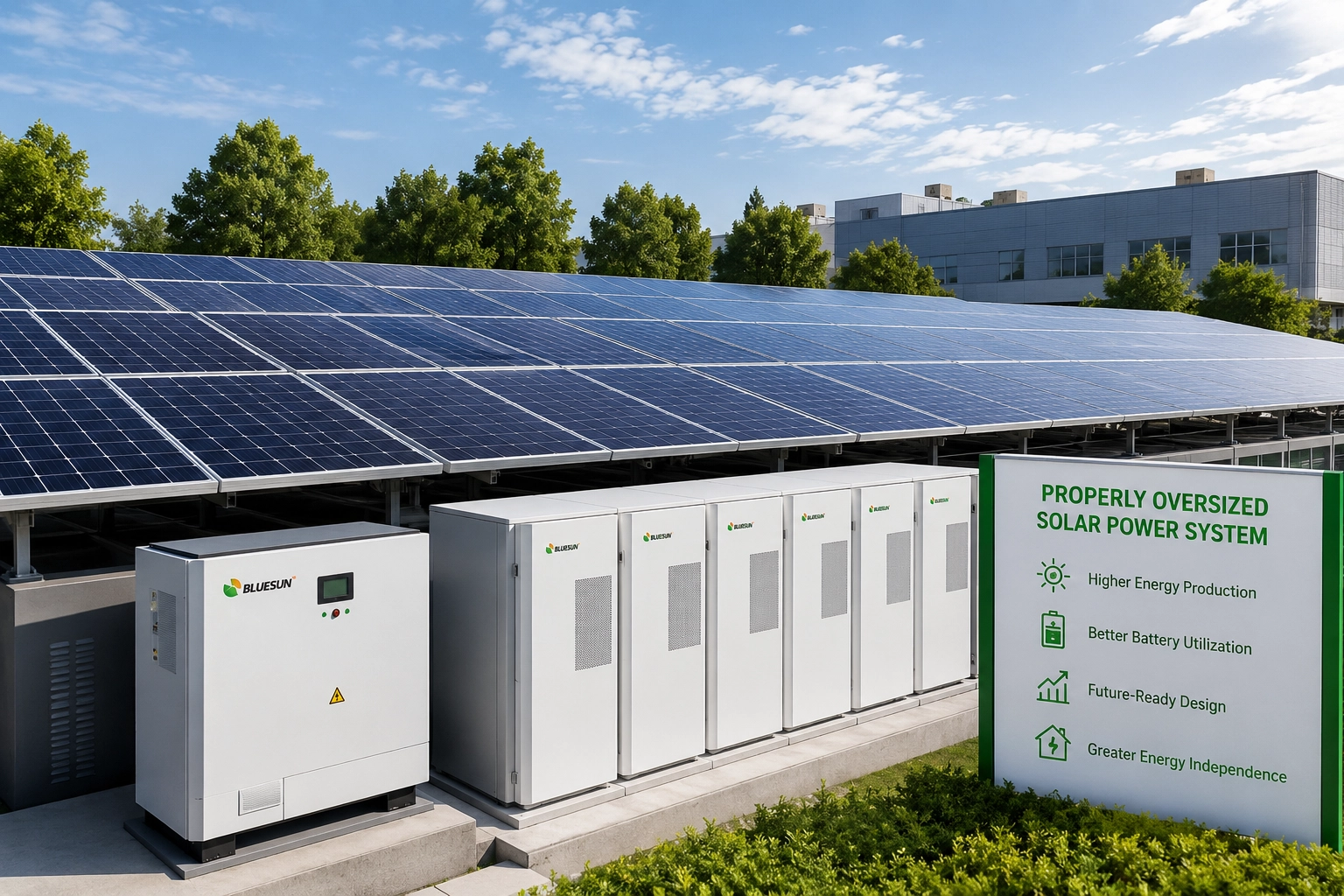
A properly oversized solar power system can help improve energy production, support battery charging, reduce grid dependence, and leave room for future expansion. But that doesn’t mean bigger is always better.
The key is finding the right balance between solar generation, inverter capacity, storage, and actual electricity demand.
Oversizing Is About Flexibility
A properly oversized solar system is designed to handle real-world conditions, future energy growth, and better long-term system performance — not simply to install more panels.
What Does It Mean to Oversize a Solar Power System?
Oversizing usually means installing a solar array with slightly more DC capacity than the inverter’s nominal AC output, or planning additional capacity for future electricity demand.
That’s because solar panels rarely operate at peak output all day long. Temperature, weather, sunlight angle, dust, shading, and seasonal conditions all affect real-world generation.
In practice, a slightly larger solar array often helps the system maintain stronger performance throughout the day, especially during weaker sunlight hours in the morning and late afternoon.
More Usable Energy Throughout the Day
One of the biggest advantages of proper oversizing is that the system can generate more usable electricity outside peak sunlight hours.
Instead of relying only on strong midday sunlight, the system can maintain better output over a longer period during the day. This usually improves overall energy utilization and increases self-consumption.
For commercial users with stable daytime electricity demand, this can help reduce dependence on expensive grid electricity.
Better Battery Charging Performance
Battery storage systems work best when there is enough solar generation available during the day.
If the PV array is too small, batteries may not fully charge during cloudy weather or periods of high electricity usage. Over time, this can reduce the value and efficiency of the entire storage system.
A properly oversized solar array gives the system more flexibility for both daytime loads and battery charging, especially in projects where backup power or evening electricity usage is important.
Preparing for Future Electricity Demand
Energy demand almost always changes over time.
Homes may later add EV chargers, air conditioning systems, heat pumps, or battery storage. Businesses may expand equipment, lighting, cooling systems, or production capacity.
If a solar system is designed only around current electricity usage, future upgrades may require additional installation work, inverter replacement, or major system redesign.
That’s one reason many installers prefer leaving reasonable room for future growth from the beginning.
Improving Energy Security
For many users, solar energy is no longer only about reducing electricity bills.
In regions with unstable utility power, rising electricity costs, or occasional outages, energy security has become an important part of system design.
A larger solar-plus-storage system can provide stronger backup capability and more stable energy availability during grid interruptions.
This approach is becoming increasingly common in modern commercial energy storage projects, where long-term energy flexibility is often more important than short-term system sizing.
Oversizing Doesn’t Mean Unlimited Expansion
Of course, oversizing still needs to follow proper engineering design principles.
An excessively oversized system may create unnecessary investment costs, inverter clipping, or installation limitations. Local grid regulations and utility policies may also affect system sizing decisions.
That’s why factors such as inverter ratio, battery capacity, installation space, load profile, and future electricity planning should all be considered together.
| System Factor | Why It Matters |
|---|---|
| PV Capacity | Determines total solar energy generation potential |
| Inverter Size | Affects energy conversion and system balance |
| Battery Storage | Improves backup capability and energy utilization |
| Future Load Growth | Helps avoid expensive future system upgrades |
Final Thoughts
In real-world projects, solar systems are rarely designed only for today’s electricity usage.
Energy demand changes over time, and a system that feels “large enough” today may become undersized much sooner than expected.
That’s why many installers and project developers choose to leave reasonable room for future growth when designing a solar system.
The goal is not simply to install more solar panels, but to build a system that delivers better flexibility, stronger long-term performance, and more stable energy management over time.