What Are Demand Charges and How Can ESS Reduce Them?
Learn what demand charges are, why they can significantly increase commercial electricity bills, and how battery energy storage systems help reduce peak demand costs.
01/ 2026.юни
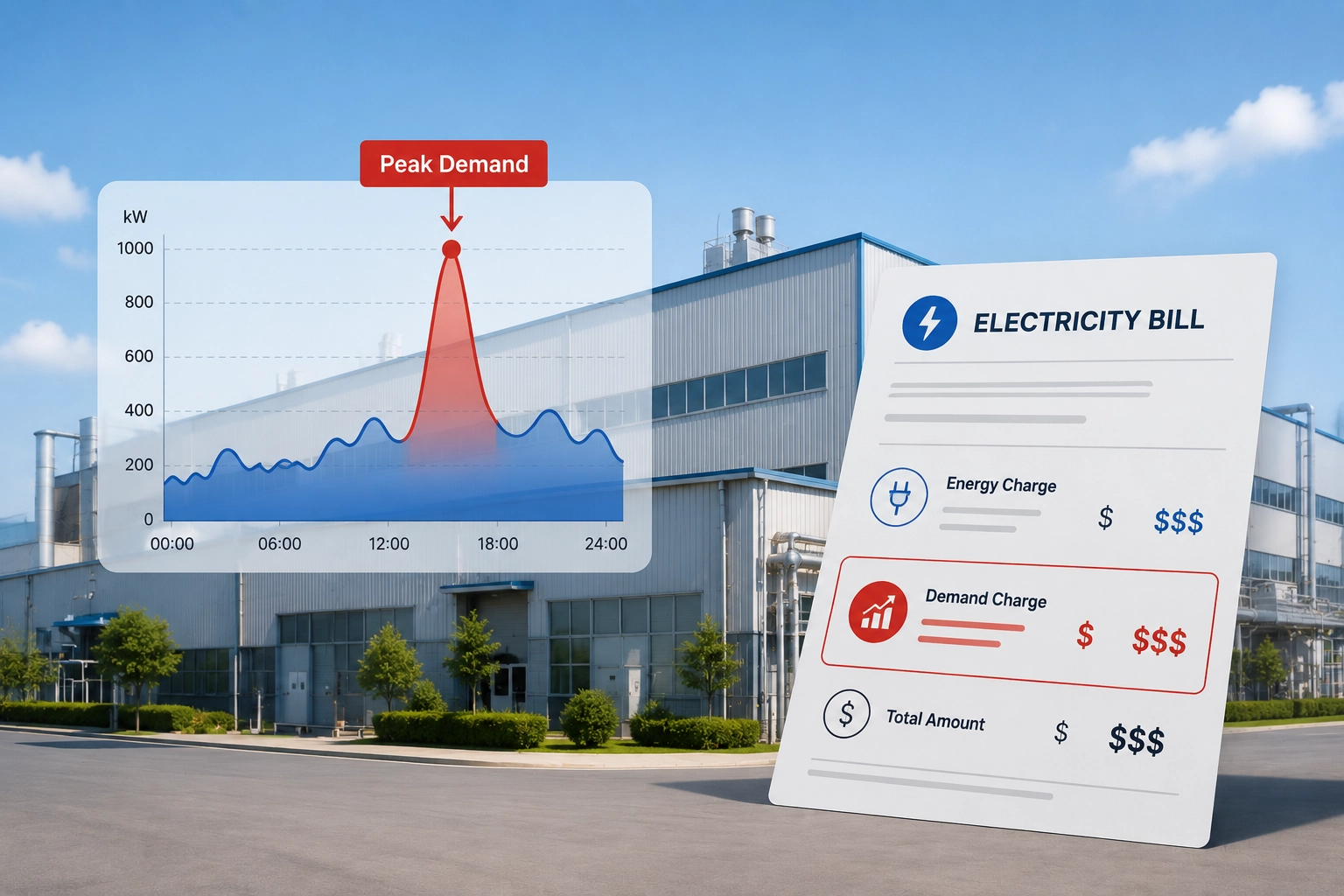
When businesses review their electricity bills, most attention is usually placed on energy consumption.How many kilowatt-hours were used? How much did each unit of electricity cost?However, for many commercial and industrial facilities, another charge can have an equally significant impact on monthly energy expenses: demand charges.
In some cases, demand charges can represent 30% to 60% of the total electricity bill.
This is one of the main reasons battery energy storage systems (ESS) are becoming increasingly attractive for commercial users.
Demand Charges Are Often Hidden in Plain Sight
Many businesses pay demand charges every month without fully understanding how they are calculated or how much they affect overall electricity costs.
Demand charges are based on peak power demand rather than total electricity consumption.
What Is a Demand Charge?
A demand charge is a fee based on the highest level of power a facility draws from the grid during a billing period.
Unlike energy charges, which are calculated based on total electricity consumed, demand charges focus on peak power usage.
For example, a factory may use a moderate amount of electricity throughout the month but briefly operate several large machines at the same time.
If that short period creates a high power demand spike, the utility may use it to calculate demand charges for the entire billing cycle.
Why Utilities Use Demand Charges
Electric utilities must build and maintain infrastructure capable of supporting peak demand.
Even if a customer only reaches that peak level for a short time, the grid must still be able to supply it.
Demand charges help utilities recover the cost of maintaining generation, transmission, and distribution capacity.
For businesses, however, these charges can create significant electricity expenses.
A Simple Example
Imagine two factories that consume the same amount of electricity each month.
Factory A operates equipment evenly throughout the day.
Factory B starts several large motors simultaneously every morning, creating a sharp demand spike.
Although total energy consumption is identical, Factory B may pay significantly higher electricity bills because of higher peak demand.
This is where energy storage can make a measurable difference.
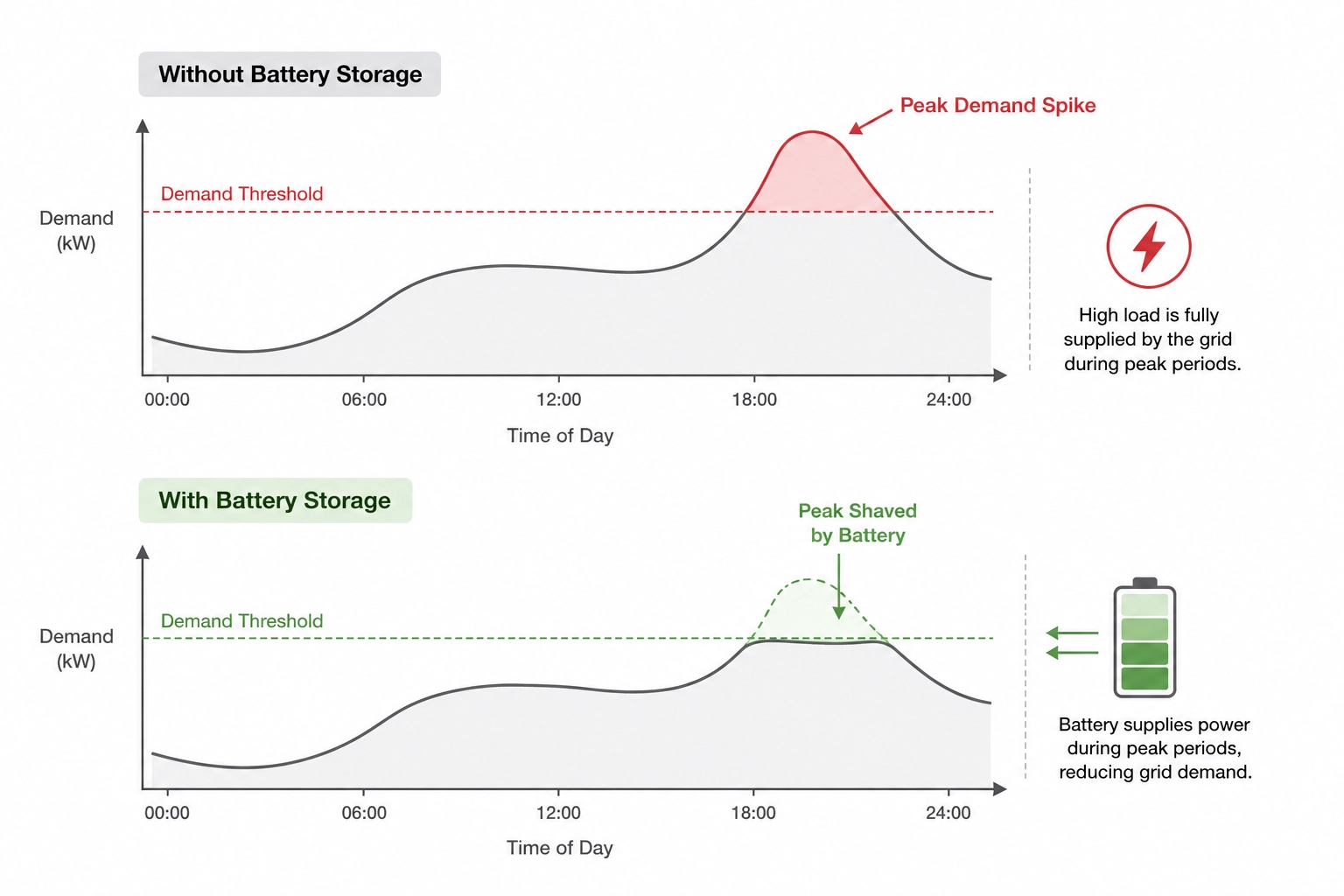
Battery storage can help reduce peak demand spikes by supplying power during high-load periods.
How ESS Helps Reduce Demand Charges
Battery energy storage systems can discharge during periods of high electricity demand.
Instead of drawing all required power from the grid, part of the load is supplied by the battery.
This lowers the facility’s peak demand and reduces the demand charge used by the utility for billing.
The process is commonly known as peak shaving.
In many commercial projects, peak shaving represents one of the largest sources of energy storage savings.
Peak Shaving Does Not Require Large Amounts of Energy
One common misconception is that a battery must run for many hours to generate value.
In reality, some facilities only need battery support for short periods during peak demand events.
A relatively short discharge window can sometimes produce substantial savings if it successfully lowers the billing demand level.
This is why demand-charge reduction projects often achieve attractive returns on investment.
Which Facilities Benefit Most?
Demand-charge reduction is particularly valuable for facilities with:
Large motors or industrial equipment
Manufacturing operations
Cold storage facilities
Commercial buildings with high HVAC loads
Logistics centers and warehouses
Facilities with EV charging infrastructure
The higher the difference between normal load and peak load, the greater the potential opportunity for peak shaving.
Demand Charges Are One Reason ESS Payback Can Be Faster Than Expected
Many businesses evaluate energy storage based only on electricity consumption savings.
However, demand-charge reduction often provides an additional source of financial return that is overlooked during early project planning.
For some commercial users, reducing peak demand can have a greater impact than reducing total electricity consumption.
This is one reason modern commercial energy storage systems are increasingly being deployed as part of broader energy management strategies.
Understanding Demand Charges Is the First Step
Demand charges may not receive as much attention as electricity prices, but they can play a major role in determining overall energy costs.
Businesses that understand when and why demand spikes occur are often in a better position to evaluate whether battery storage can deliver meaningful savings.
For many commercial facilities, controlling peak demand is no longer just an energy-management strategy — it is becoming an important business decision.
Demand-charge reduction is one of the key reasons many commercial energy storage projects achieve attractive returns.
If you’re evaluating the financial side of an ESS investment, you may also be interested in our article on
how long a commercial ESS takes to pay back.
Вашият най-добър доставчик на фотоволтаициBluesun предлага цялостен набор от решения за фотоволтаични системи които могат да оптимизират широк спектър от проектни приложения.


 BG
BG  EN
EN  ES
ES  FR
FR  DE
DE  RU
RU  ZH
ZH  AR
AR  RO
RO