Bluesun Solar ensures the security and efficiency of your solar investment. Contact us today for expert support and solutions.
29/ 2023.nov.Proper grounding is one of the most important safety measures in photovoltaic systems. A reliable grounding system helps protect solar equipment from lightning strikes, electrical surges, leakage current, and unexpected inverter shutdowns.
As photovoltaic installations continue to expand worldwide, grounding design has become essential for ensuring the safe operation of a solar power system, especially in areas with frequent thunderstorms and unstable weather conditions.
Photovoltaic systems operate outdoors year-round and are continuously exposed to lightning strikes, voltage surges, humidity, and environmental stress. Without proper grounding, electrical faults can damage equipment and create serious safety risks.
Grounding provides a safe path for fault current and surge energy to flow into the earth, helping reduce the impact of lightning and improving electrical protection throughout the system.
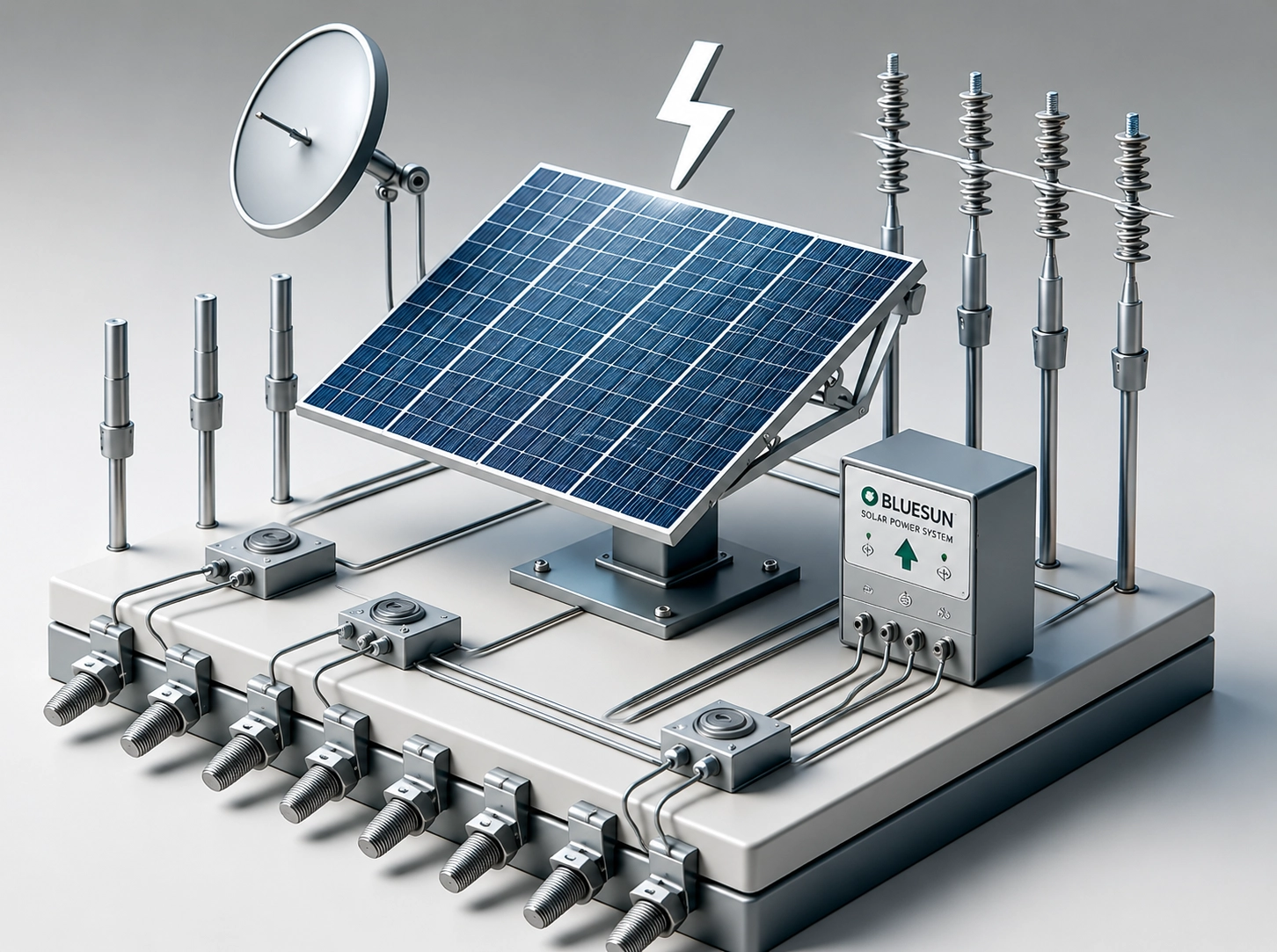
Typical photovoltaic grounding and lightning protection structure for solar power systems.
Solar panel frames are usually made of aluminum alloy with protective surface coatings. Proper frame grounding requires connecting the grounding holes of the module frame directly to the mounting structure to ensure stable electrical conductivity.
Reliable frame grounding helps reduce leakage current and improves lightning protection performance across the photovoltaic array.
Grounding systems commonly use galvanized flat steel, copper grounding rods, or copper-clad steel conductors. In most photovoltaic projects, grounding resistance should remain below 4Ω to maintain effective lightning protection.
For areas with high soil resistance, additional grounding enhancement materials may be required to improve conductivity.
Functional grounding connects the inverter PE terminal to the distribution system, ensuring stable voltage reference and reducing electromagnetic interference during operation.
Protective grounding ensures the inverter enclosure remains at earth potential, helping reduce the risk of electric shock and equipment damage during electrical faults or lightning events.
In many photovoltaic systems, inverter grounding shares the same grounding network as the distribution box and lightning protection system.
Surge protection devices (SPDs) installed inside the distribution box help protect photovoltaic systems from transient voltage surges caused by lightning strikes or switching operations.
When surge voltage exceeds the protection threshold, the SPD redirects excessive energy safely into the grounding system.
All metallic components inside the distribution box should be securely connected to the grounding system to maintain electrical continuity and improve overall protection performance.
Improper grounding may lead to inverter faults, communication interruptions, SPD failure, electrical leakage, and equipment damage during lightning activity.
Poor grounding can also increase maintenance frequency and reduce the long-term operational safety of photovoltaic systems.
Grounding resistance that exceeds the recommended range reduces the effectiveness of surge dissipation and lightning protection.
Poor grounding connections between solar panel frames, mounting structures, and grounding conductors may create unstable electrical conditions.
Improper installation of surge protection devices may prevent the grounding system from safely redirecting surge energy during lightning events.
Corroded or exposed grounding cables may gradually reduce grounding reliability and increase electrical safety risks.


 RO
RO  EN
EN  ES
ES  FR
FR  DE
DE  RU
RU  ZH
ZH  AR
AR  BG
BG