


Modular Rack Configuration
Combine battery modules in a rack to configure storage capacity around the project requirements.

BSM48106H
A modular LiFePO4 rack battery cabinet for commercial energy storage. Each 51.2V 106Ah module provides approximately 5.42kWh, with cabinet capacity configured as 5.42 × N kWh.
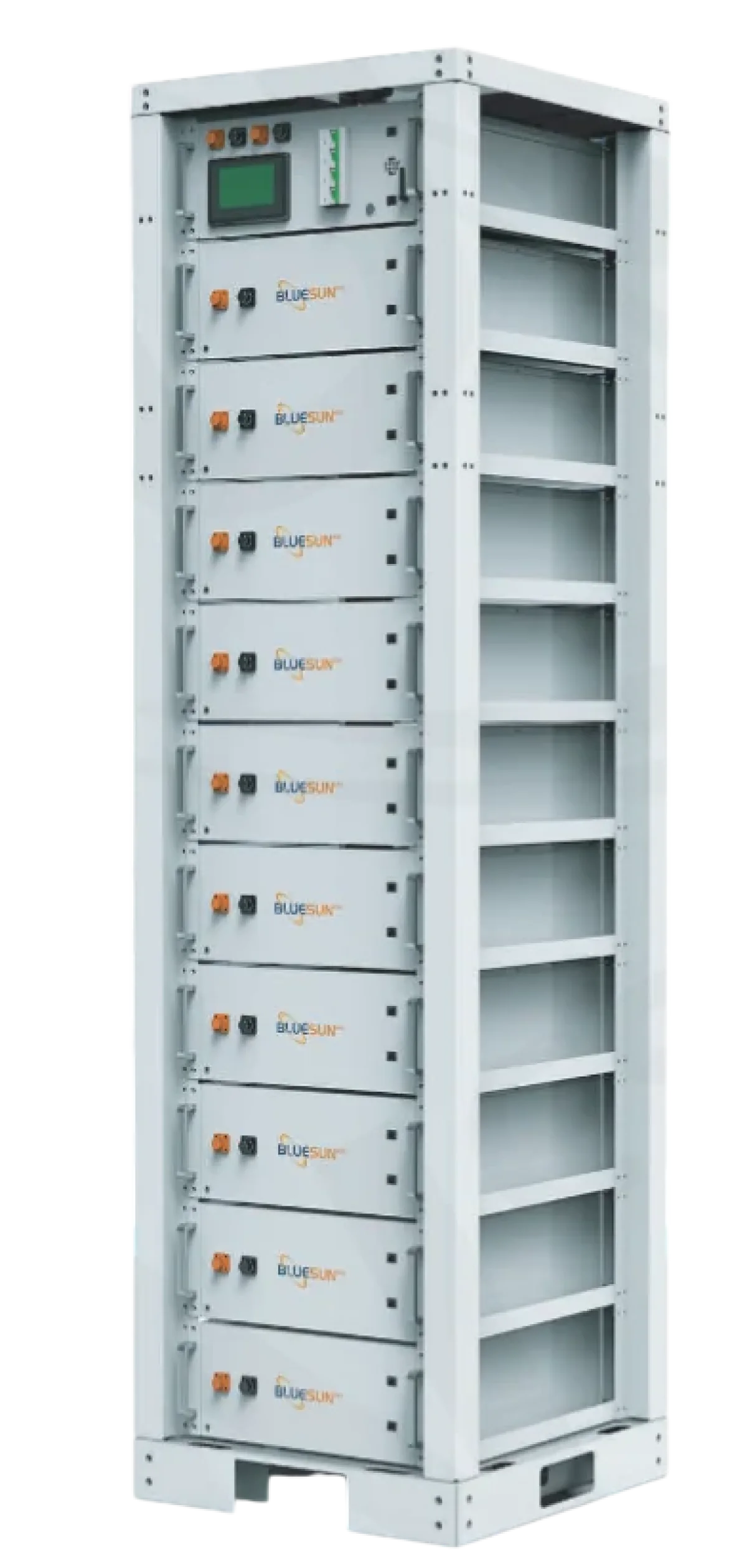
Battery overview
The Bluesun BSM48106H is a modular high-voltage LiFePO4 rack battery system. A 51.2V 106Ah module contributes approximately 5.42kWh; cabinet energy is specified as 5.42 × N kWh, where N is the configured module count.
Battery modules work with a high-voltage main controller and rack structure. For larger installations, the documented architecture also includes a DC bus cabinet for system-level communication and protection.
The final configuration is selected around the PCS operating voltage, required energy, load profile and installation conditions. The cabinet image illustrates the product architecture rather than a fixed capacity included in every order.
Combine battery modules in a rack to configure storage capacity around the project requirements.
Cell, battery cluster and system management coordinate monitoring, balancing and protection.
Series-connected modules build system voltage for integration with compatible PCS equipment.
The documentation lists CANBUS, Modbus RTU and TCP/IP interfaces at the battery-system level.
Applications
Specify the required energy, power, operating voltage and PCS model before selecting the battery cabinet configuration.
Battery storage for compatible commercial solar-plus-storage projects, configured to the required energy and PCS architecture.
Support selected site loads with a correctly designed battery, PCS, control and protection system.
Multiple rack configurations can be evaluated with system-level management and DC bus equipment for larger projects.
Technical data
Explore the system components and switch between module, controller and complete-system technical data.
51.2V · 106Ah · approximately 5.42kWh per module. Rack-mounted LiFePO4 modules form the battery string.
BSM1000V120A provides high-voltage battery control and communication within the configured system.
The rack houses the modules and controller. A DC bus cabinet may be specified for larger multi-rack installations.
N is the configured number of battery modules. Energy examples below use the confirmed rounded value of 5.42kWh per module; they are illustrative calculations rather than a published list of available cabinet packages.
409.6 V nominal system voltage
512 V nominal system voltage
614.4 V nominal system voltage
Confirm the permitted module count, complete charging voltage window and PCS compatibility before ordering. The controller rating alone does not establish the acceptable configuration.
Module capacity is shown as 106Ah and approximately 5.42kWh, as confirmed for this product. Other values follow the supplied technical tables. Module and system operating limits are listed separately.
Product resources
Download the supplied document covering the battery module, high-voltage controller, rack system and DC bus cabinet. The supplied PDF retains its original module capacity table; the product capacity on this page follows the confirmed 106Ah version.
Product FAQ
Understand module energy, cabinet configuration and system integration before specifying a project.
This product uses the confirmed 51.2V 106Ah module version, presented as approximately 5.42kWh per module. The supplied PDF retains an earlier 100Ah / 5.12kWh parameter table.
Cabinet energy is approximately 5.42 × N kWh, where N is the configured module count. Confirm the final system specification and permitted module count with Bluesun.
51.2V is the nominal voltage of one module. Series-connected modules increase the system nominal voltage to 51.2 × N V; the cabinet operates as a high-voltage battery system.
No. The product image shows a rack configuration. The number of modules, resulting capacity, controller, DC bus equipment and project scope must be specified in the quotation.
The supplied technical tables list 80% depth of discharge for the battery module and 90% for the system. These are distinct documented ratings; the delivered system settings must follow the confirmed configuration.
The battery documentation describes modules, a high-voltage controller, rack and DC bus architecture. PCS, inverter, EMS and other project equipment must be confirmed separately in the project scope.
Provide the required storage energy, charge and discharge power, PCS model and voltage range, application, installation environment and desired quantity.
Product inquiry
Share the required kWh, charge and discharge power, PCS model, voltage range, installation conditions and project location. Our team can help define the battery cabinet configuration.

