
 FR
FR  EN
EN  ES
ES  DE
DE  RU
RU  ZH
ZH  AR
AR  RO
RO  BG
BG 
From home backup systems to commercial storage projects, many users are choosing LFP battery technology because it offers a good balance of safety, cycle life, and long-term stability.
For stationary energy storage, the goal is usually not to make the battery as small and light as possible. The bigger concern is whether the system can operate safely and reliably for many years.
Energy Storage Batteries Have Different Priorities
For solar and ESS projects, battery safety, cycle life, thermal stability, and maintenance cost are often more important than maximum energy density.
What Is a LiFePO4 Battery?
LiFePO4 stands for Lithium Iron Phosphate. It is one of the most widely used lithium battery chemistries for solar and energy storage applications.
Compared with some other lithium battery types, LiFePO4 batteries are generally known for stable performance, long cycle life, and better thermal safety.
Although LFP batteries usually have lower energy density than NCM batteries, this is not a major problem for most stationary energy storage projects, where safety and lifespan matter more than weight.
Why Safety Matters in Solar Energy Storage
Energy storage systems often work every day, charging and discharging under changing temperatures and load conditions.
For homes, commercial buildings, off-grid projects, and industrial sites, battery safety is a key part of system design.
LiFePO4 chemistry has better thermal stability than many high-energy lithium chemistries, which helps reduce operating risk in long-term storage applications.
This is one reason why many LiFePO4 solar battery systems are now used in residential and commercial solar storage projects.
Cycle Life Affects Long-Term Cost
Battery lifespan directly affects the real cost of an energy storage project.
If a battery needs to be replaced too early, the system may look affordable at first but become expensive over time.
LiFePO4 batteries are widely used because they can support frequent charge and discharge cycles, making them suitable for daily solar storage and backup applications.
| Type de batterie | Main Strength | Common Use |
|---|---|---|
| LiFePO4 / LFP | Long cycle life, stable operation, better safety | Solar storage, ESS, off-grid systems |
| NCM / NMC | Higher energy density, lighter weight | EVs, portable applications |
LFP vs NCM: Different Batteries for Different Jobs
NCM batteries are often used where weight and space are very important, such as electric vehicles and portable devices.
Energy storage systems usually have different priorities. In most ESS projects, the battery stays in a fixed location, so weight is less important than safety, lifespan, and operating stability.
That is why LiFePO4 is often a better fit for solar battery storage, off-grid power systems, and commercial ESS projects.
Why LiFePO4 Works Well for Long-Duration Storage
Many solar storage systems are expected to run every day for many years.
Some projects only need short backup power, while others need several hours of discharge for peak shaving, solar shifting, or off-grid operation.
In these applications, long cycle life becomes very important.
We also discussed this in our article about 4-hour energy storage systems, where longer storage duration is becoming more common in commercial and industrial projects.
Where LiFePO4 Batteries Are Commonly Used
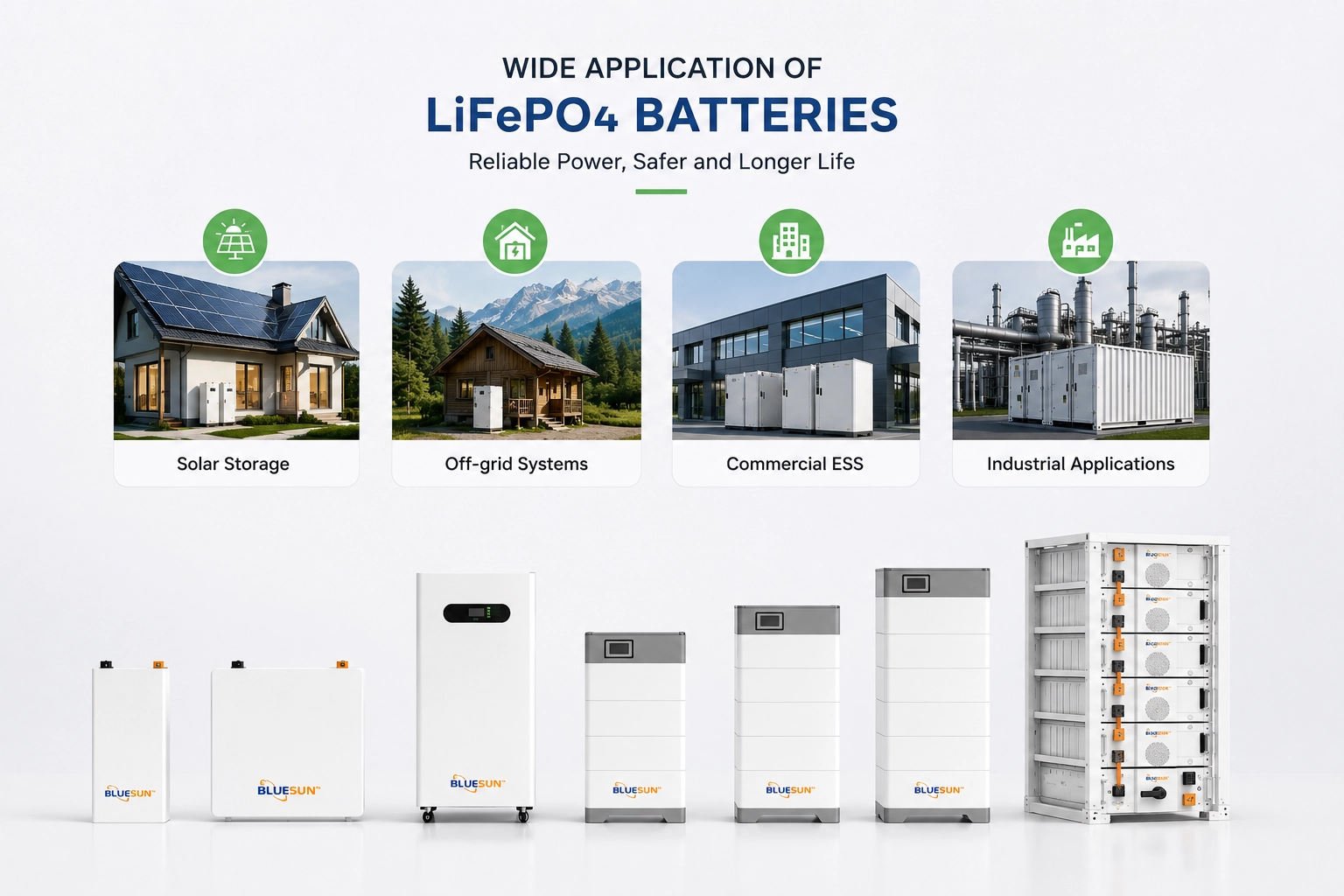
LiFePO4 batteries are now widely used in different energy storage applications, including:
- Home solar battery backup
- Off-grid solar systems
- Commercial energy storage projects
- Industrial ESS applications
- Containerized battery systems
- Solar-plus-storage projects
For these applications, users usually care about stable operation, safe installation, low maintenance, and predictable long-term performance.
What Buyers Should Pay Attention To
When comparing lithium batteries for solar storage, chemistry is only one part of the decision.
Buyers should also pay attention to:
- Battery cycle life
- Usable capacity
- BMS protection
- Thermal management
- Warranty terms
- System compatibility
A good battery system is not only about the cell chemistry. The full system design, protection logic, and installation environment also affect long-term performance.
For users planning solar storage projects, choosing a suitable lithium battery storage system from the beginning can help reduce future replacement and maintenance costs.
Where the Market Is Moving
As solar and energy storage adoption continues growing, LiFePO4 batteries are likely to remain one of the main choices for stationary storage systems.
Different lithium battery chemistries will continue to serve different markets, but for solar storage and ESS projects, LFP offers a practical balance of safety, lifespan, and cost control.
For many residential, commercial, and off-grid energy projects, that balance is exactly what matters most.