
 DE
DE  EN
EN  ES
ES  FR
FR  RU
RU  ZH
ZH  AR
AR  RO
RO  BG
BG 
Understanding the key components of a solar power system can help buyers choose the right configuration, avoid unnecessary costs, and improve system efficiency over the project lifetime.
Was ist eine Solarstromanlage?
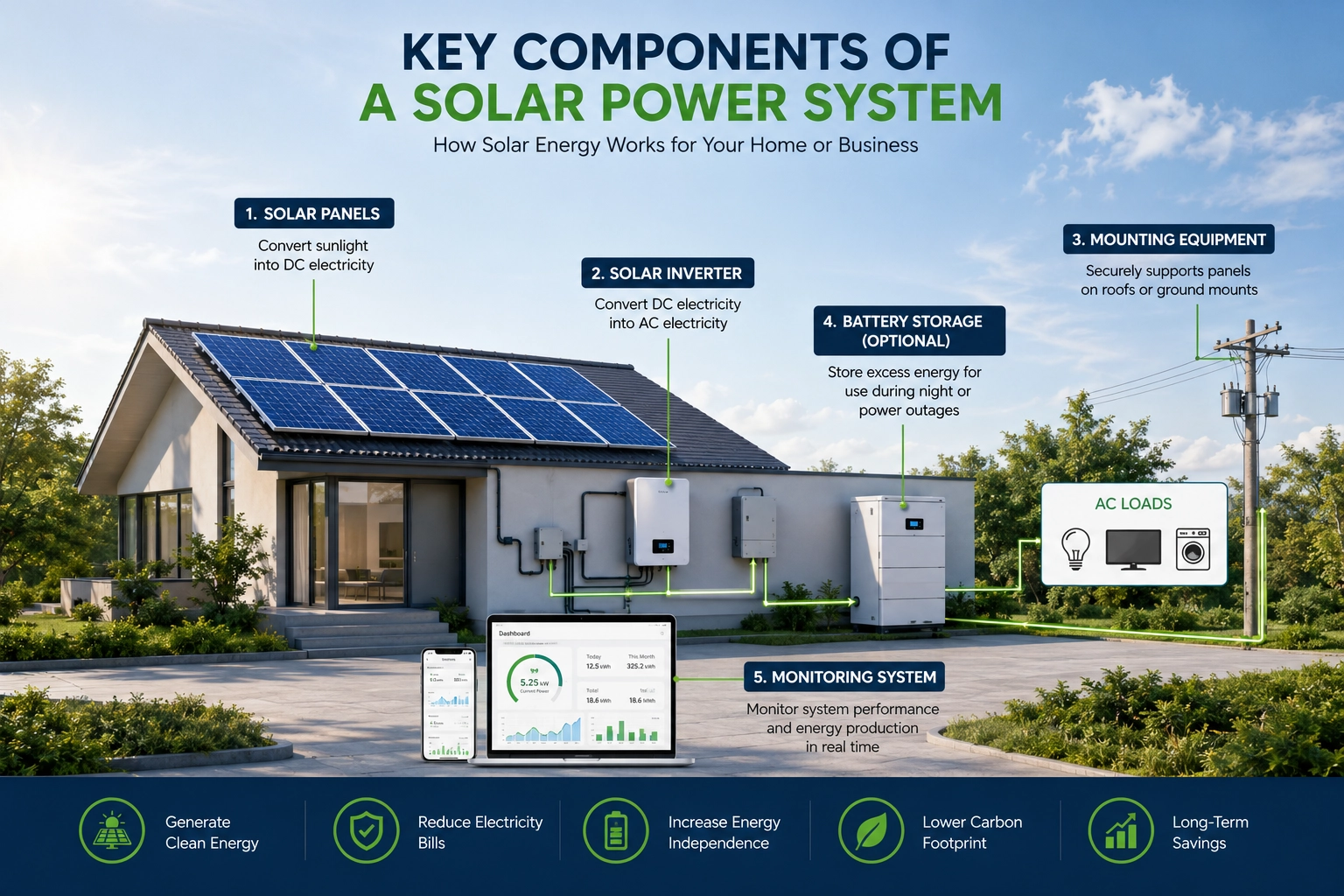
A solar power system is an energy solution that converts sunlight into usable electricity. In most systems, solar panels generate direct current electricity, while an inverter converts it into alternating current for homes, businesses, or grid connection.
Depending on the application, a system may also include battery storage, monitoring equipment, mounting structures, protection devices, and energy management systems.
Key Point
A complete solar power system is not only about solar panels. The inverter, battery storage, mounting structure, and system design all affect energy output, safety, and long-term return.
1. Solar Panels
Solar panels are the core power generation component of a solar energy system. They capture sunlight and convert it into DC electricity through photovoltaic cells.
Different projects may use different module technologies, such as monocrystalline panels, bifacial modules, TOPCon panels, HJT modules, or HPBC solar modules. The choice depends on available space, efficiency requirements, budget, climate conditions, and project type.
For projects that need higher power output and long-term energy yield, choosing reliable Sonnenkollektoren is one of the most important steps in system planning.
2. Solar Inverter
The solar inverter converts DC electricity generated by solar panels into AC electricity that can be used by electrical appliances, commercial equipment, or the power grid.
There are several common inverter types, including grid-tie inverters, off-grid inverters, and hybrid inverters. Each type is designed for different system applications.
| Inverter Type | Main Function | Typical Application |
|---|---|---|
| Grid-Tie Inverter | Connects solar power to the utility grid | Residential and commercial grid-connected systems |
| Off-Grid Inverter | Works independently from the grid | Remote homes, farms, islands, and telecom sites |
| Hybrid-Wechselrichter | Manages solar panels, batteries, and grid power | Solar-plus-storage systems |
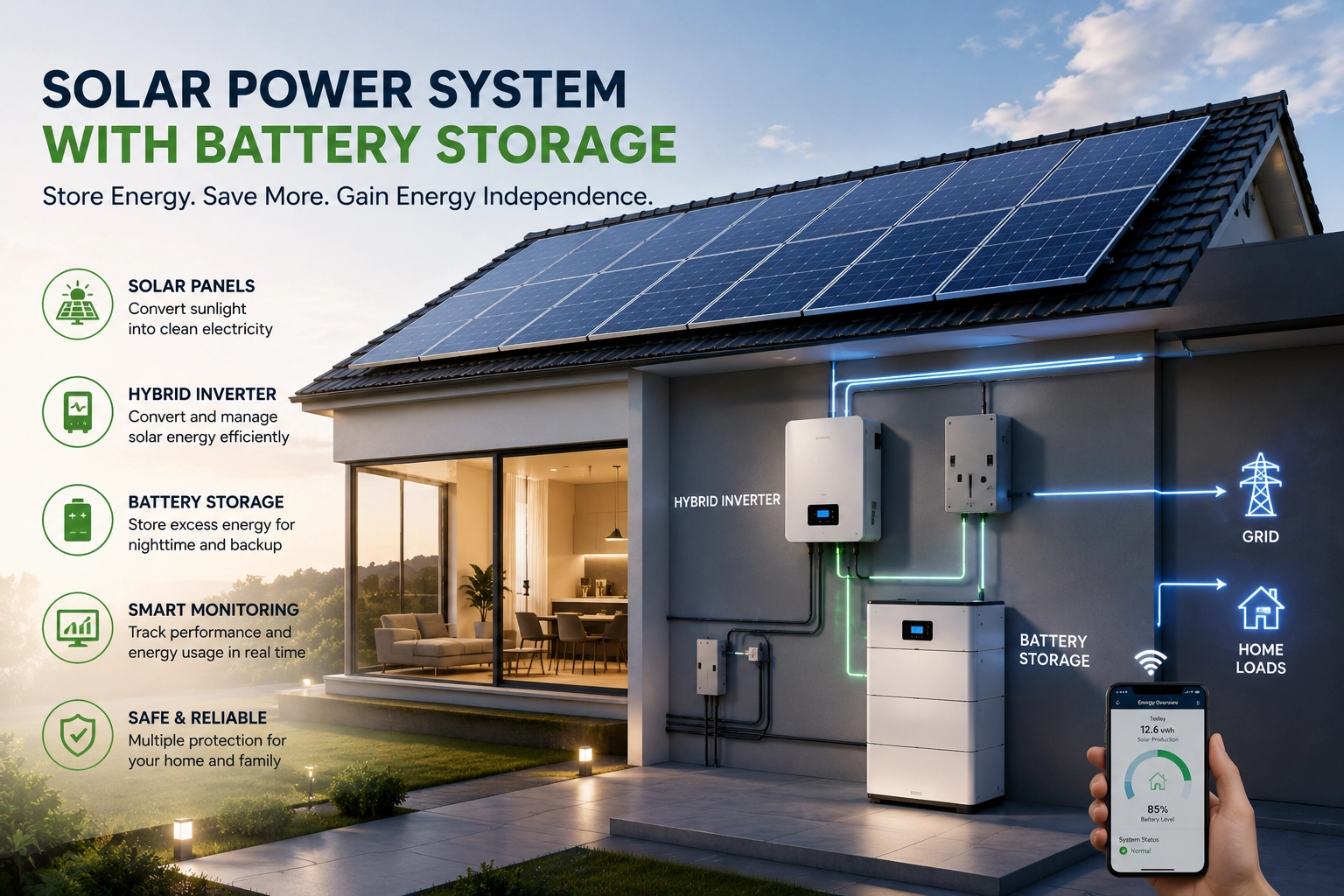
For projects that require both solar generation and battery storage, a hybrid inverter can help manage energy flow more efficiently.
3. Mounting Structure
The mounting structure secures solar panels on rooftops, ground foundations, carports, or other installation surfaces. A good mounting system helps ensure panel stability, correct tilt angle, wind resistance, and long-term safety.
Mounting design should consider roof type, ground conditions, wind load, snow load, installation angle, local regulations, and maintenance access.
For long-term system safety, choosing a durable solar mounting structure is just as important as selecting the right solar panels.
4. Battery Storage
Battery storage is optional in some solar systems, but it is becoming increasingly important for energy independence, backup power, and electricity cost management.
A battery storage system stores excess solar power generated during the day and releases it when sunlight is unavailable or when electricity demand is higher. This is especially useful for off-grid systems, hybrid systems, and commercial energy projects.
For homes, residential battery storage can improve self-consumption and provide backup power. For larger projects, commercial or containerized storage systems may be used to support peak shaving and grid stability.
5. Überwachungssystem
A monitoring system helps users track solar power generation, electricity consumption, battery status, inverter performance, and overall system efficiency.
Modern monitoring platforms often provide real-time data through mobile apps or online dashboards. This makes it easier to identify performance issues, compare expected and actual output, and optimize energy usage.
For commercial and industrial projects, monitoring can also support maintenance planning and reduce system downtime.
6. Protection and Electrical Components
A safe solar power system also requires protection and electrical components such as DC cables, AC cables, combiner boxes, breakers, surge protection devices, fuses, grounding systems, and distribution panels.
These components help protect the system from overcurrent, short circuits, lightning, voltage surges, and other electrical risks. Although they may not be as visible as solar panels or batteries, they are essential for system safety and compliance.
On-Grid, Off-Grid, and Hybrid Solar Systems
Different solar power systems use different combinations of components. The right system type depends on grid availability, power consumption habits, backup requirements, and project budget.
| System Type | Main Components | Best For |
|---|---|---|
| On-Grid Solar System | Solar panels, grid-tie inverter, mounting structure, monitoring | Homes and businesses with stable grid access |
| Netzunabhängiges Solarsystem | Solar panels, off-grid inverter, battery storage, controller, mounting | Remote areas without grid access |
| Hybrid Solar System | Solar panels, hybrid inverter, batteries, grid connection, monitoring | Users needing both grid connection and backup power |
An on-grid solar system is suitable for users who want to reduce electricity bills while staying connected to the utility grid. An off-grid solar system is better for remote locations where grid electricity is unavailable or unstable.
How to Choose the Right Solar Power System Components
Choosing the right components requires more than comparing prices. Buyers should consider system purpose, daily electricity consumption, installation environment, battery backup needs, local grid conditions, and long-term maintenance.
Important factors include:
- Available roof or ground installation space
- Daily and seasonal electricity consumption
- Grid connection conditions
- Backup power requirements
- Solar panel efficiency and warranty
- Inverter compatibility
- Battery capacity and cycle life
- Mounting safety and local wind load requirements
- Monitoring and maintenance needs
Buying Tip
The best solar power system is not always the cheapest system. A well-designed system should balance efficiency, safety, cost, battery needs, installation conditions, and long-term reliability.
Residential vs Commercial Solar Power Systems
Residential solar systems are usually designed to reduce household electricity bills and improve energy independence. These systems often use rooftop solar panels, grid-tie or hybrid inverters, and optional battery storage.
Commercial solar power systems are usually larger and may require more detailed engineering design. Businesses often focus on electricity cost reduction, peak shaving, energy management, and long-term return on investment.
For commercial or industrial projects, a complete Solarstromanlage should be designed according to site conditions, load profile, project budget, and future expansion needs.
Final Thoughts
A solar power system includes many components that work together to deliver clean and reliable electricity. Solar panels generate power, inverters convert electricity, mounting structures support the system, batteries store energy, and monitoring devices help track performance.
For buyers, understanding these key components makes it easier to choose the right solution for residential, commercial, or off-grid applications. A well-designed solar power system can improve energy efficiency, reduce electricity costs, and provide long-term value.
Need Help Choosing a Solar Power System?
Bluesun provides solar panels, inverters, lithium battery storage, mounting structures, and complete solar power system solutions for residential, commercial, and off-grid projects.