
 ES
ES  EN
EN  FR
FR  DE
DE  RU
RU  ZH
ZH  AR
AR  RO
RO  BG
BG 
The Right Inverter Depends on How You Use Energy
Some users simply want to reduce daytime electricity costs, while others need backup power, energy storage support, or smarter energy management. The right inverter depends on the actual application scenario.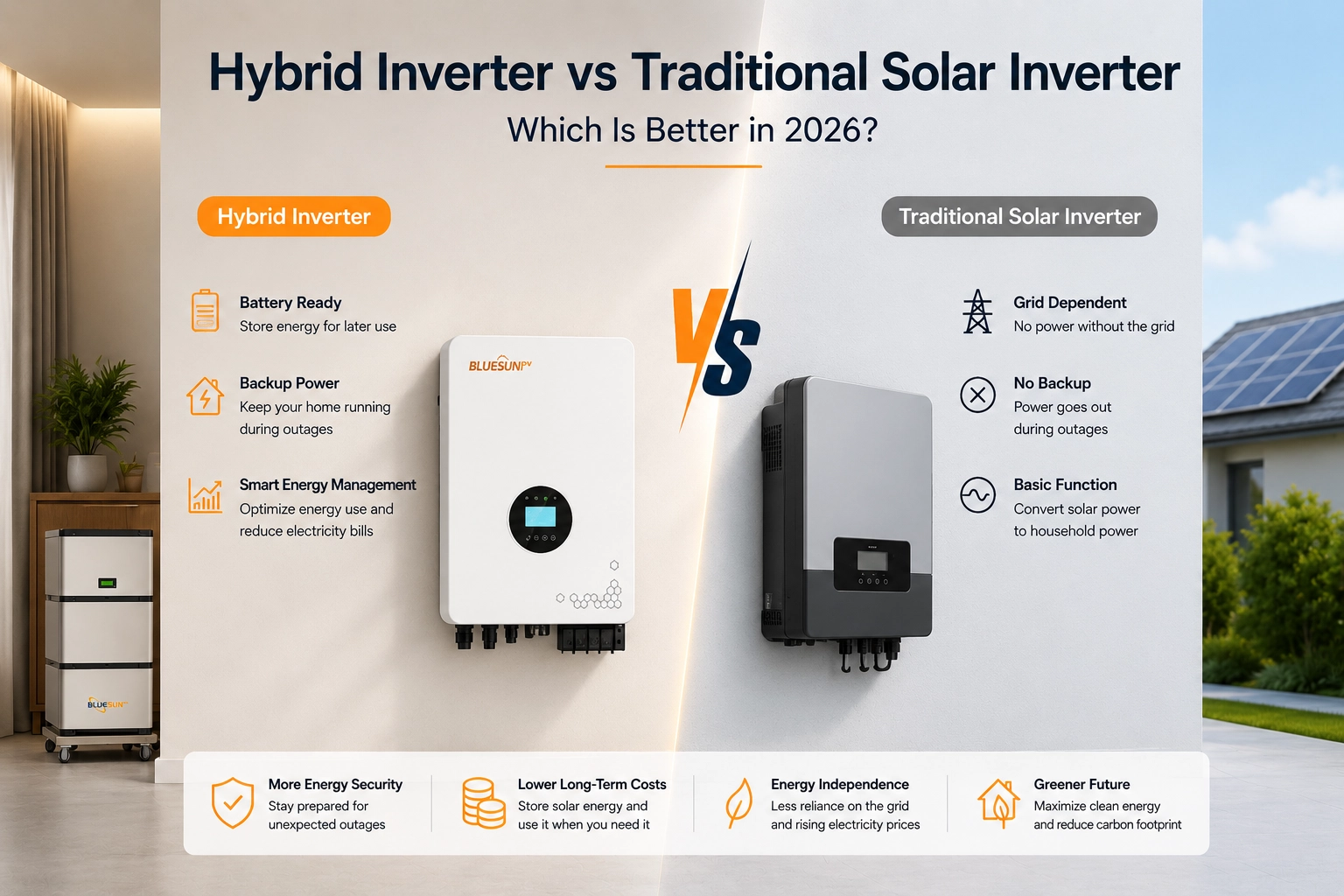
What Is a Traditional Solar Inverter?
A traditional solar inverter mainly converts DC electricity generated by solar panels into usable AC electricity for homes or businesses. In most standard on-grid solar systems, electricity generated during the day is used immediately, while excess power may be sent back to the utility grid. Traditional inverters are often simpler and lower in initial cost, making them a common choice for projects focused mainly on reducing daytime electricity bills. However, most traditional systems cannot provide backup power during outages because they depend heavily on the utility grid.What Is a Hybrid Inverter?
A hybrid inverter combines standard solar inverter functionality with advanced energy management capabilities. Unlike traditional systems, hybrid inverters can manage energy flow between solar panels, battery storage, household loads, and the utility grid. This allows users to store excess solar energy for later use instead of relying only on real-time solar generation. Modern inversores híbridos are increasingly used in residential and commercial projects where backup power, energy independence, and smarter electricity management are becoming more important.Hybrid Inverter vs Traditional Solar Inverter
| Feature | Traditional Solar Inverter | Inversores Híbridos |
|---|---|---|
| Battery Compatibility | Usually not supported | Built-in battery support |
| Backup Power Capability | Limited or unavailable | Supports backup power |
| Energy Management | Basic | Advanced and programmable |
| Grid Dependence | Higher | Lower |
| Initial Investment | Lower | Higher |
| Future Expansion | More limited | More flexible |
When Does a Traditional Inverter Make Sense?
Traditional solar inverters are still a practical solution for many projects. If the local utility grid is stable and the main goal is reducing daytime electricity bills, a traditional inverter may already meet the project requirements. For users who do not need battery storage or backup power, traditional systems are often simpler and more cost-effective. This type of system is still widely used in standard residential rooftop projects and small commercial installations.When Is a Hybrid Inverter the Better Choice?
Hybrid inverters become more valuable when energy flexibility matters. Users who experience unstable utility power, frequent outages, peak electricity pricing, or increasing nighttime electricity usage often benefit more from hybrid systems. Hybrid systems are also becoming increasingly popular in homes with EV chargers, smart energy management systems, and future battery expansion plans. Instead of using solar energy only during the day, hybrid systems allow users to store and manage electricity more intelligently.In many modern solar projects: Users are no longer focused only on generating electricity. They also want better control over how and when that energy is used.